
8
Score
Innocently taps into your creative side in a way that feels effortless
ShantyTown Review
By lyndonguitar
Published on May 1, 2026 review
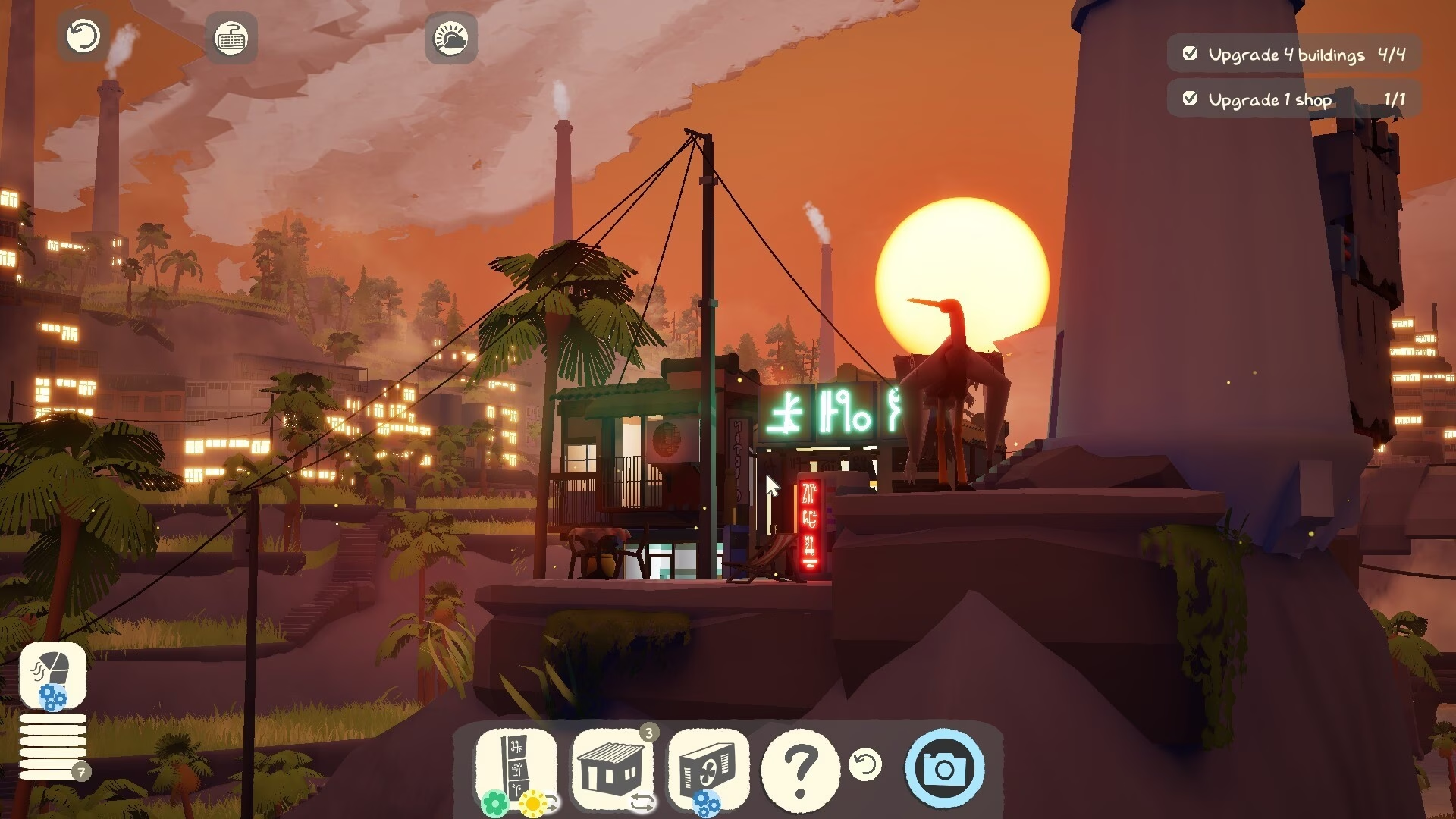
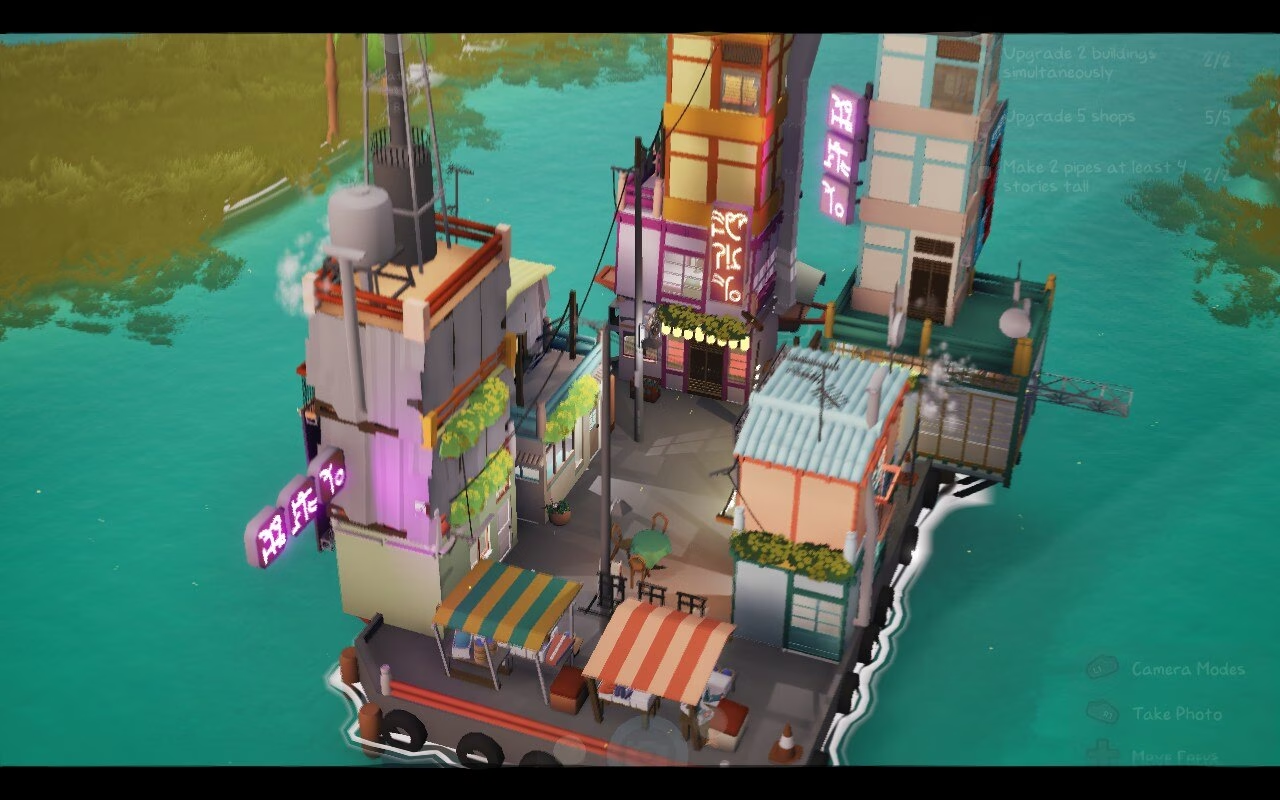
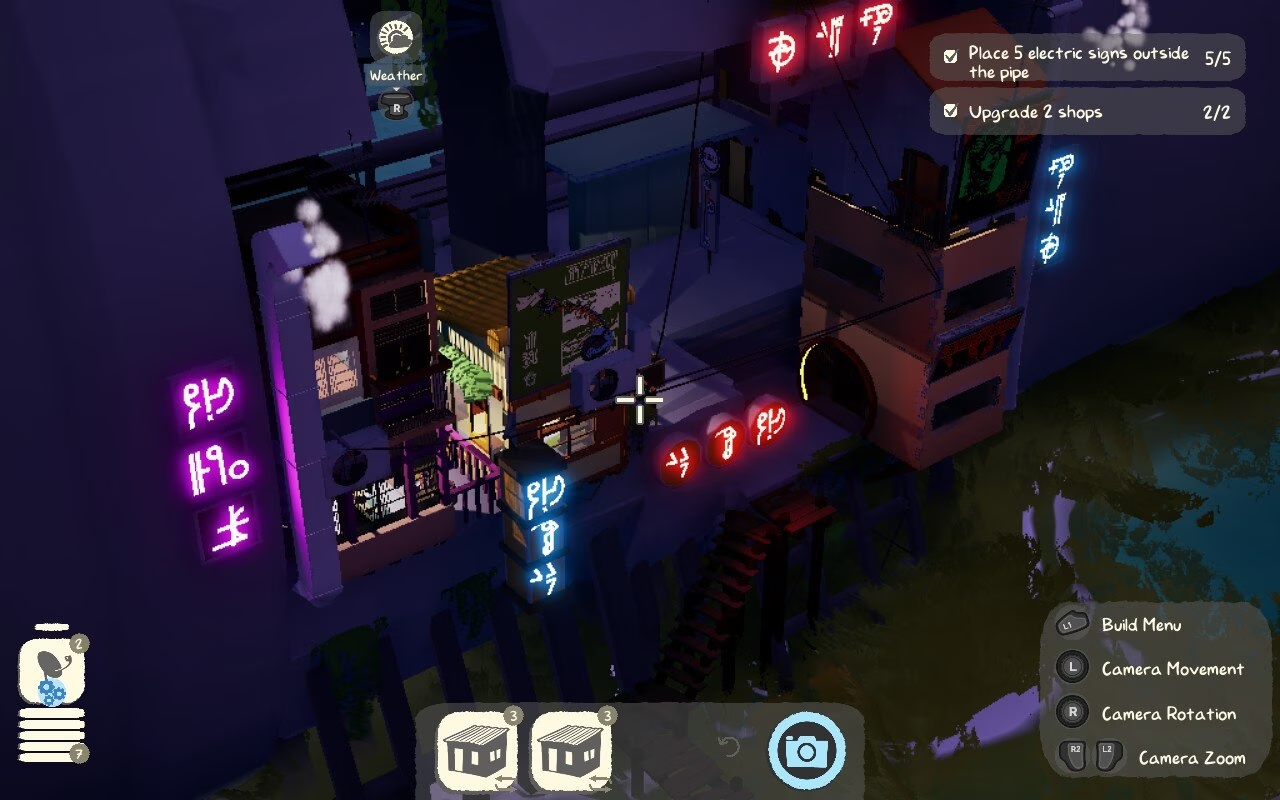
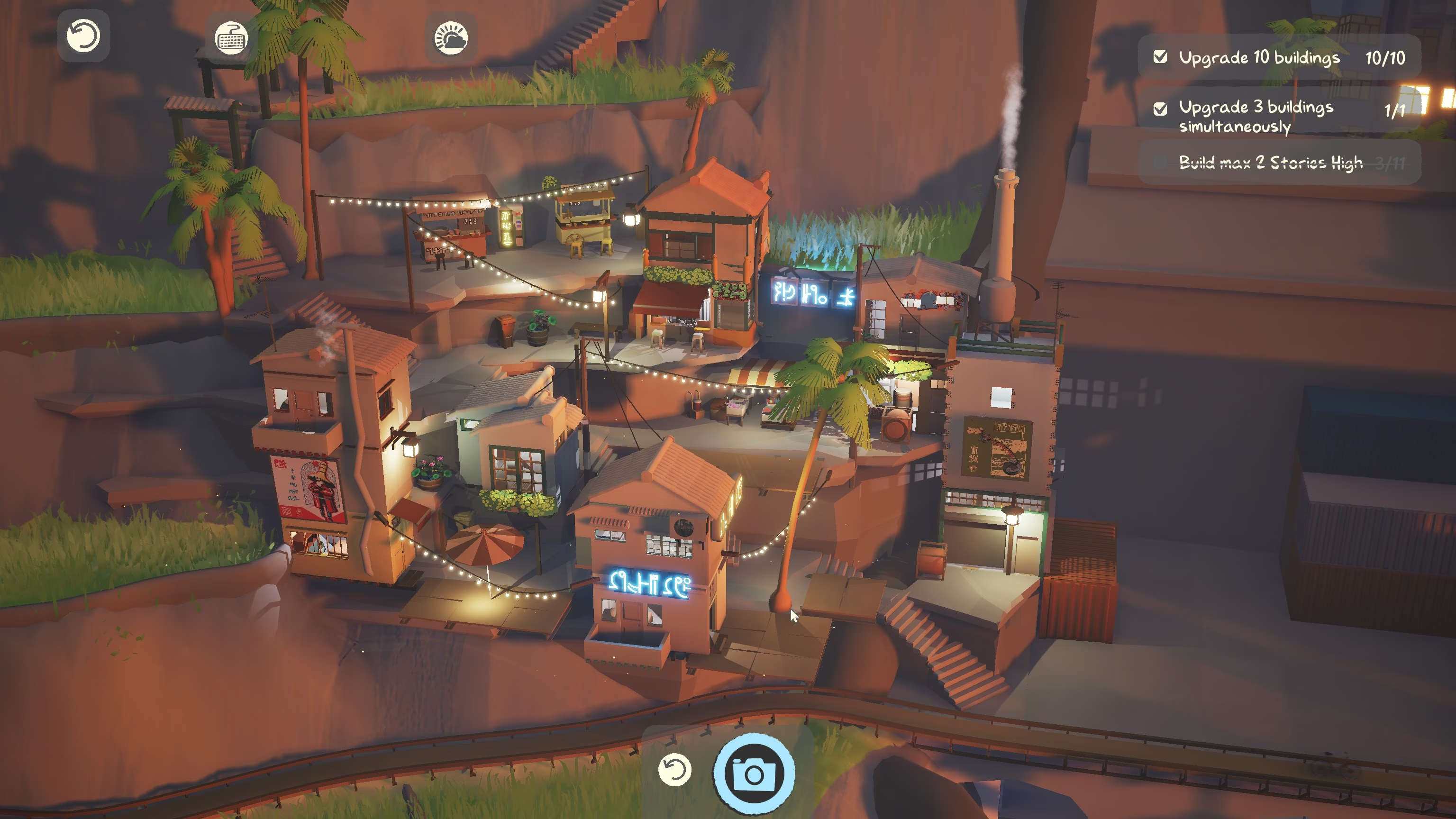
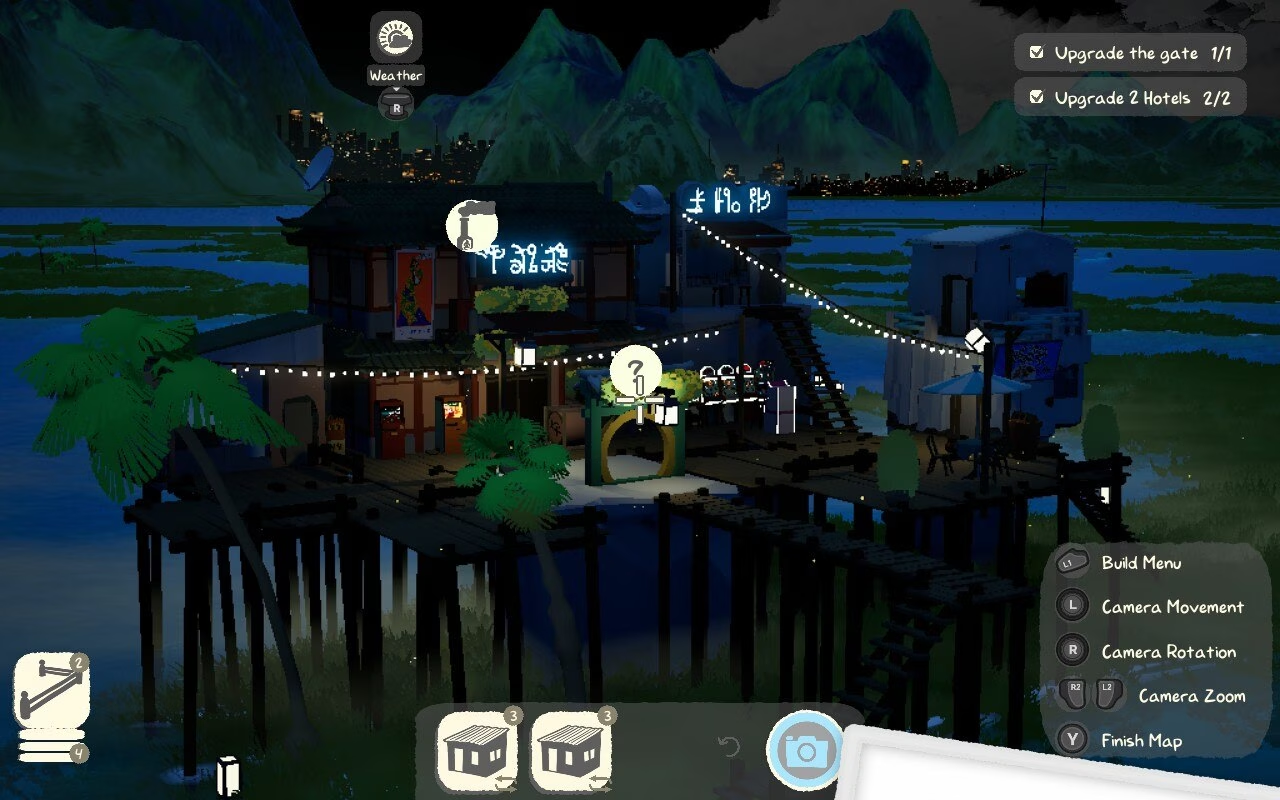
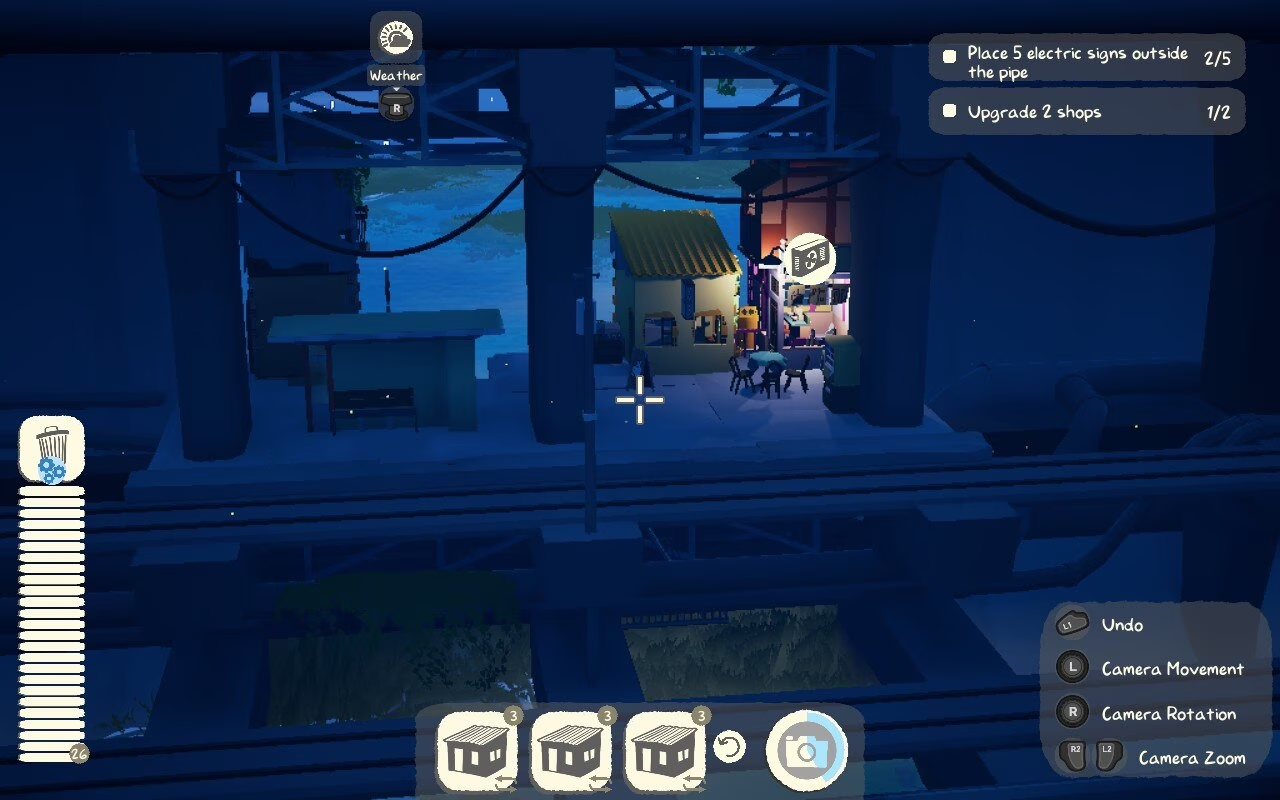
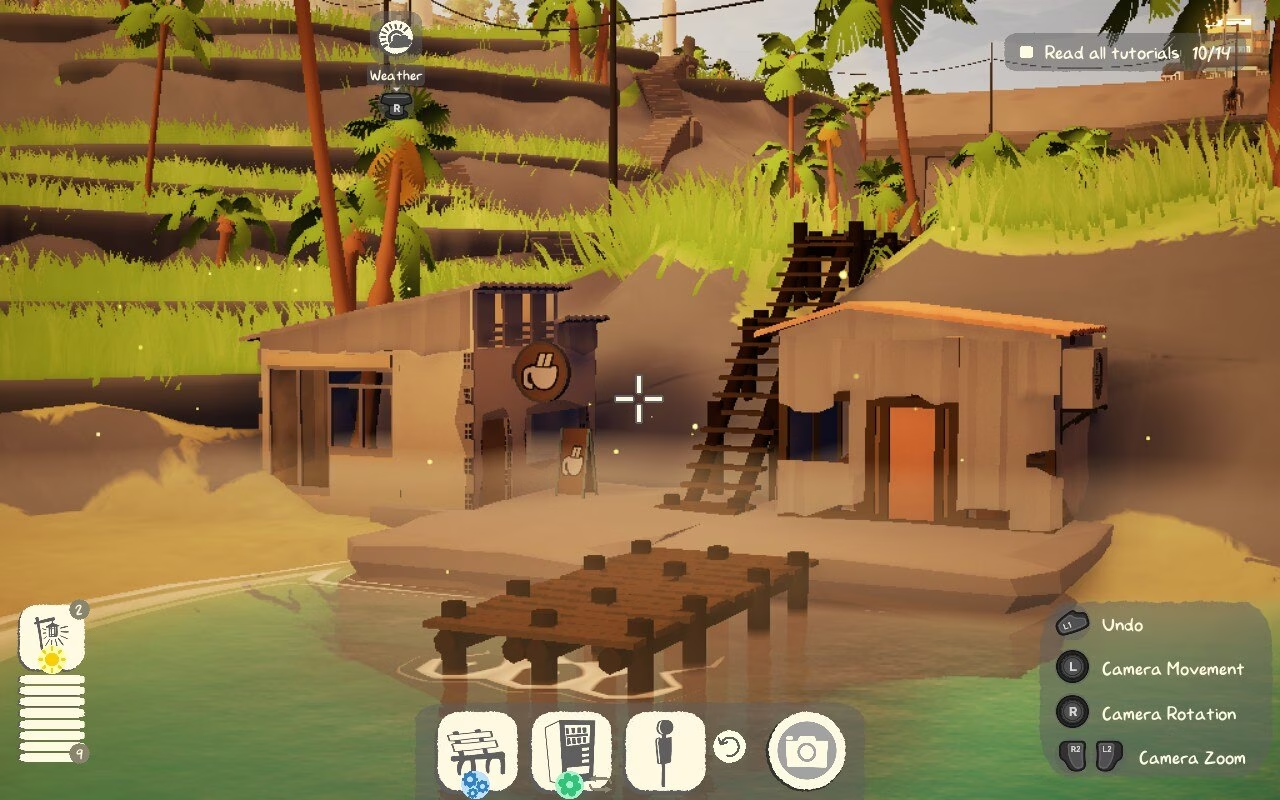

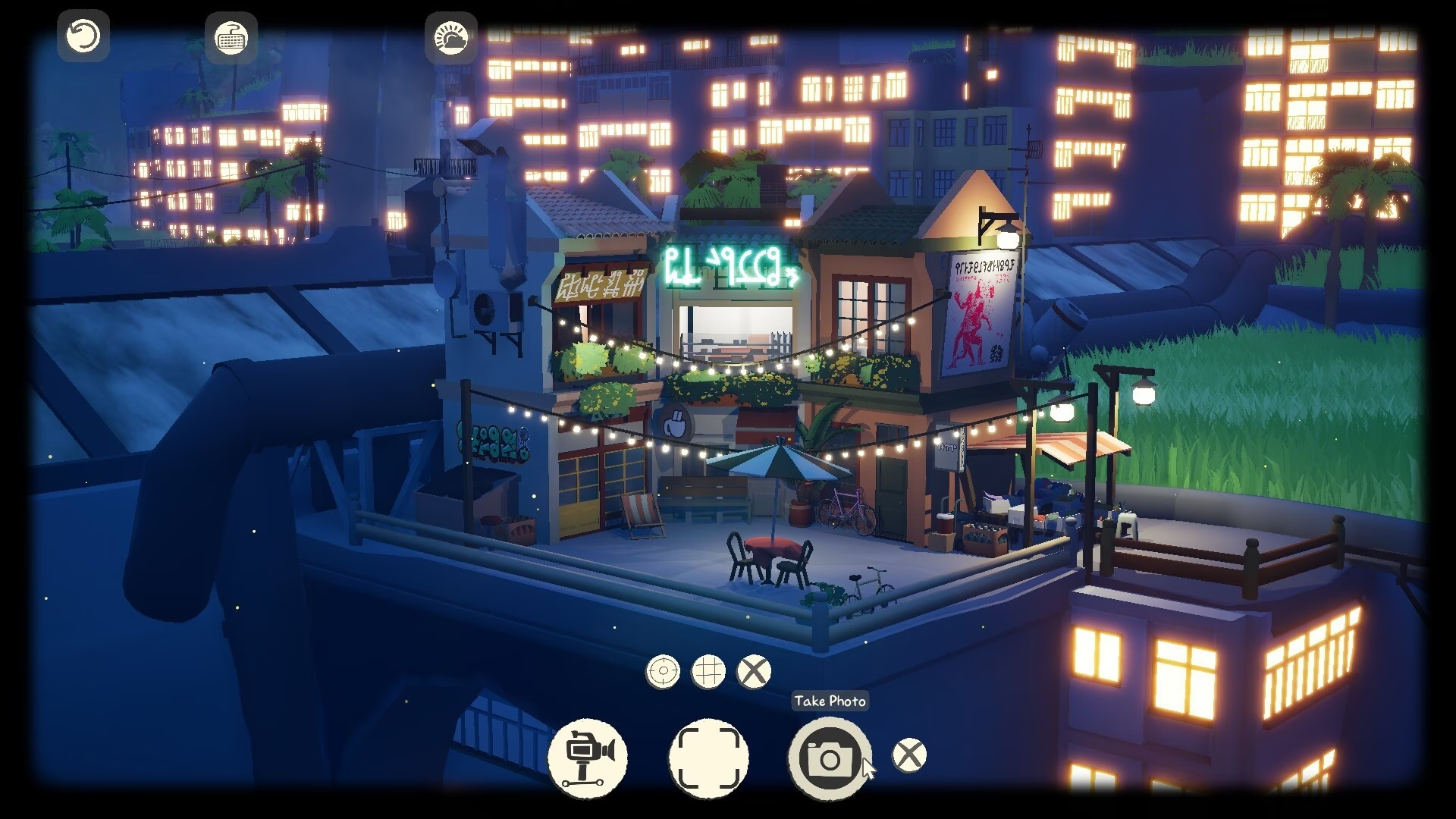
ShantyTown is a creative, stress-free puzzle game that also happens to be a bite-sized city builder. Eschewing the complex logistics of power grids, budgetary concerns, or population happiness, it focuses on the simple, tactile joy of placing colorful structures in cramped, but charming ‘ShantyTown’ spaces. It’s a game that respects your time and your creativity, offering a “cozy” experience that feels genuinely restorative without all the pressures and challenges of a typical city builder..
Pros
Cons
There’s a specific kind of magic in games that don’t ask you to be a god or a master planner, but rather just a simple gamer who likes to solve easy puzzles, while also decorating a tiny piece of land. While most city builders demand you manage revenues, sewage lines, and the general happiness of a digital populace, ShantyTown takes a much more intimate route. It’s a bite-sized, stress-free experience that understands exactly why we like putting digital blocks on top of each other: the sheer, tactile joy of making something pretty out of nothing. It doesn’t want your sweat; it just wants your afternoon.
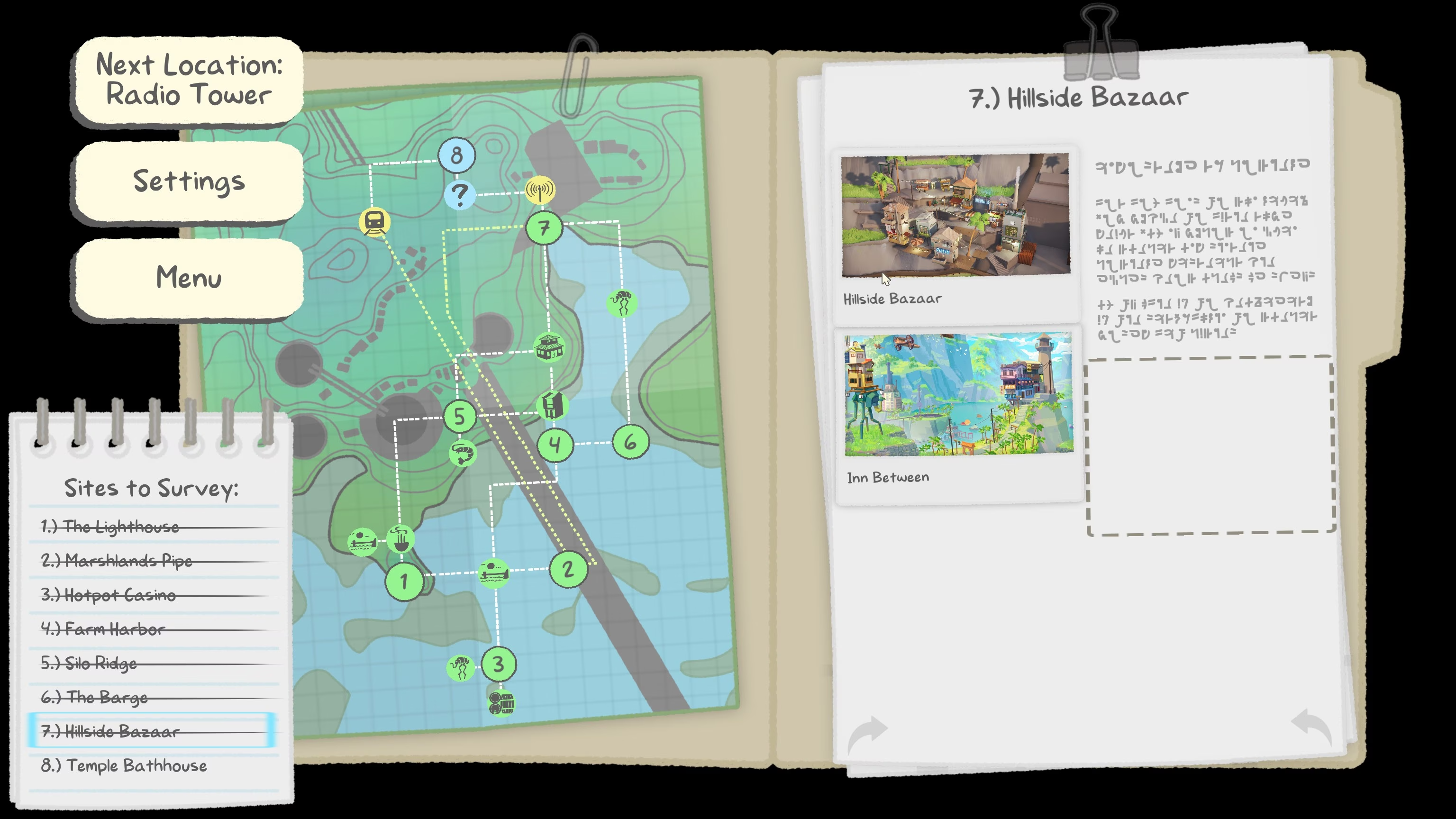
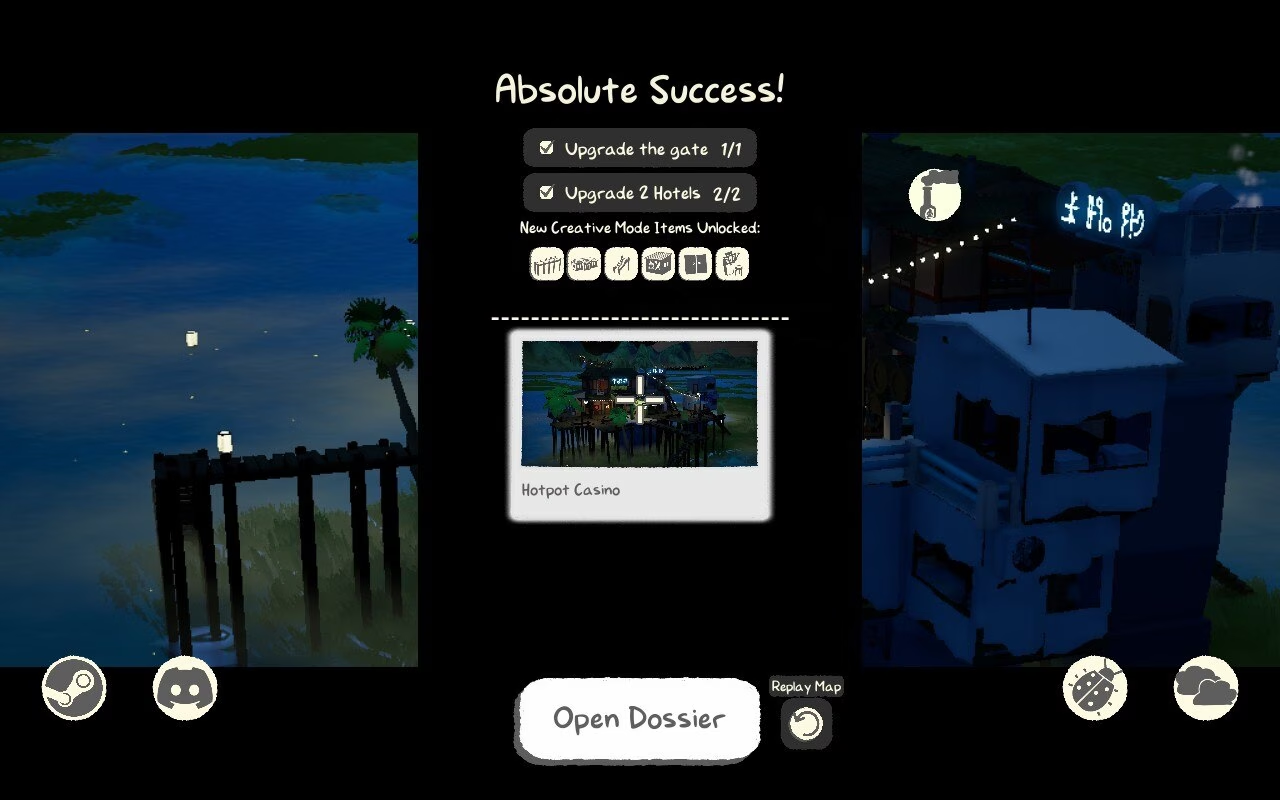
In ShantyTown, you step into the shoes of a surveyor tasked with assembling vibrant, dense urban micro ‘ShantyTown’ cities across 20 distinct locations all in one big map. The core loop is built around a “deck-based” placement system where you are assigned a randomized sequence of buildings, signs, and props to use, rather than picking from an open menu where everything is available (although there is a Creative Mode where you are free to add everything you’ve unlocked so far).
To progress in the levels, you must fulfill specific upgrade requirements for your structures—such as providing lighting, utilities, or decorations—which causes them to get upgraded and transform into more detailed, polished versions of themselves. Once you’ve satisfied enough of these needs that vary per level, or at least filled the environment, you capture a final snapshot of your creation, logging it into your permanent dossier before moving to the next blank canvas.
ShantyTown is a puzzle game disguised as an urban project. You aren’t given an infinite toolbox of assets (except in Creative Mode). Instead, you’re handed a fixed sequence of buildings and items that appear in a specific order. Your job is to find the right home for them within the constraints of the current level.
What’s fascinating is how the game handles your freedom. Technically, there is nothing stopping you from creating an absolute, unlogical, nonsense-looking district just to satisfy the objectives or place all the objects, to move on to the next level. You could just dump buildings wherever they fit.. But you won’t. This game innocently taps into your creative side in a way that feels effortless. You start a level purely to place some basic things, then realize you have to “solve the puzzle,” but by the time you’re placing those final items, you realize you’ve personally handcrafted a beautiful town unplanned. There’s a genuine rush of serotonin when you step back and look at a messy, vibrant neighborhood that feels like it has its own history and inhabitants, all born from a simple set of objectives.
One of my biggest pet peeves with level-based builders, or games in general, is the “erasure” of work. Usually, you finish Level 1, click “Next,” and Level 1 ceases to exist anymore and now your in level 2, rinse and repeat. ShantyTown fixes this beautifully. As you progress through the map, your previous buildings and creations remain visible. Sometimes they’re just beside the next level. Sometimes you can spot them from across the map. They stay with you throughout the whole playthrough.
It’s a small touch, but it’s a powerful one. It creates a sense of legacy—a physical reminder of your progress that stays with you. You aren’t just clearing stages; you are slowly building a world. You can always go back and view the pictures you’ve taken of these older districts, though this is where a minor gripe comes in. Right now, the UI forces you to shuffle through individual level views just to see their respective photo galleries. For a game that encourages you to admire your work, the lack of a unified photo library is a strange, friction-heavy design choice.
As far as “cozy games” go, this one hits every right note. It’s a charming, relaxing way to spend an afternoon or two, and the combination of light puzzling and calm gameplay is a winning formula. It’s the kind of game you play when you want to turn your brain off but still want to feel like you’ve accomplished something tangible.
However, the “chill” vibe doesn’t exactly extend to the hardware requirements. I spent most of my time with this on a Steam Deck, and while it’s a great fit for handheld play, it was surprisingly system hungry. Even on modest graphics settings, the game consumes a higher GPU usage than I would expect for a title of this scale. It’s visually demanding in a way that feels a bit unoptimized, so don’t expect to play for five hours straight without a charger nearby, or expect to run it well with a low powered laptop or device, unlike other cozy games where the system requirements is usually a non-issue.
The most significant hurdle to the “Zen” experience is the technical polish—specifically the interface. The UI is undeniably clunky. Playing mostly on a controller (which was a nice touch to add nonetheless). I could not ignore that there are moments where it just seems to break under its own weight; I ran into issues where commands simply wouldn’t work or windows would somehow duplicate themselves on the screen.
When you’re trying to sink into the flow of building, having to fight with a item that won’t be selected or a command that won’t register is a buzzkill. It doesn’t ruin the game, but it’s a reminder that beneath the beautiful shanties, the UX could use a little more polish. For now, keyboard and mouse control is currently better and more stable in this game.
ShantyTown succeeds because it understands the “accidental architect” in all of us. By stripping away the stress of traditional city building and focusing on the handcrafted feel of a persistent world, it offers something uniquely soothing. It’s not perfect—the technical hitches and the need for a little bit of more polish is noticeable—but the feeling of looking back at a sprawling, colorful legacy you built block-by-block is worth the minor frustrations. If you need a break from the high-stakes world of modern gaming, this is a neighborhood worth surveying into.