
A Glimpse into the Future of AI RPG games
OMEA Demo Review
By lyndonguitar
Published on July 20, 2026 review
Editor’s Note: This review/preview is based on an Demo build as of July 2026. Because of this, our assessment reflects the current state of gameplay, mechanics, and technical performance, all of which are subject to change prior to the official retail release with full content available.
For as long as we’ve played RPGs, we’ve been lying to ourselves about freedom. We boot up massive, triple-A epics boasting “limitless choices,” only to find ourselves clicking through the same three or four predetermined dialogue branches. You either play as the saint, the sarcastic mercenary, the funny guy, or whatever. OMEA is the first time in a very long time where I felt the walls of that digital playground actually fall down. It’s an AI-powered narrative adventure where you don’t choose from a list—you just say or type what you want to do, and a dynamic Game Master reacts on the fly on the exactly the words you’ve said… It is a wildly ambitious look at what roleplaying could eventually become, even if the current technology still feels a bit rough around the edges.
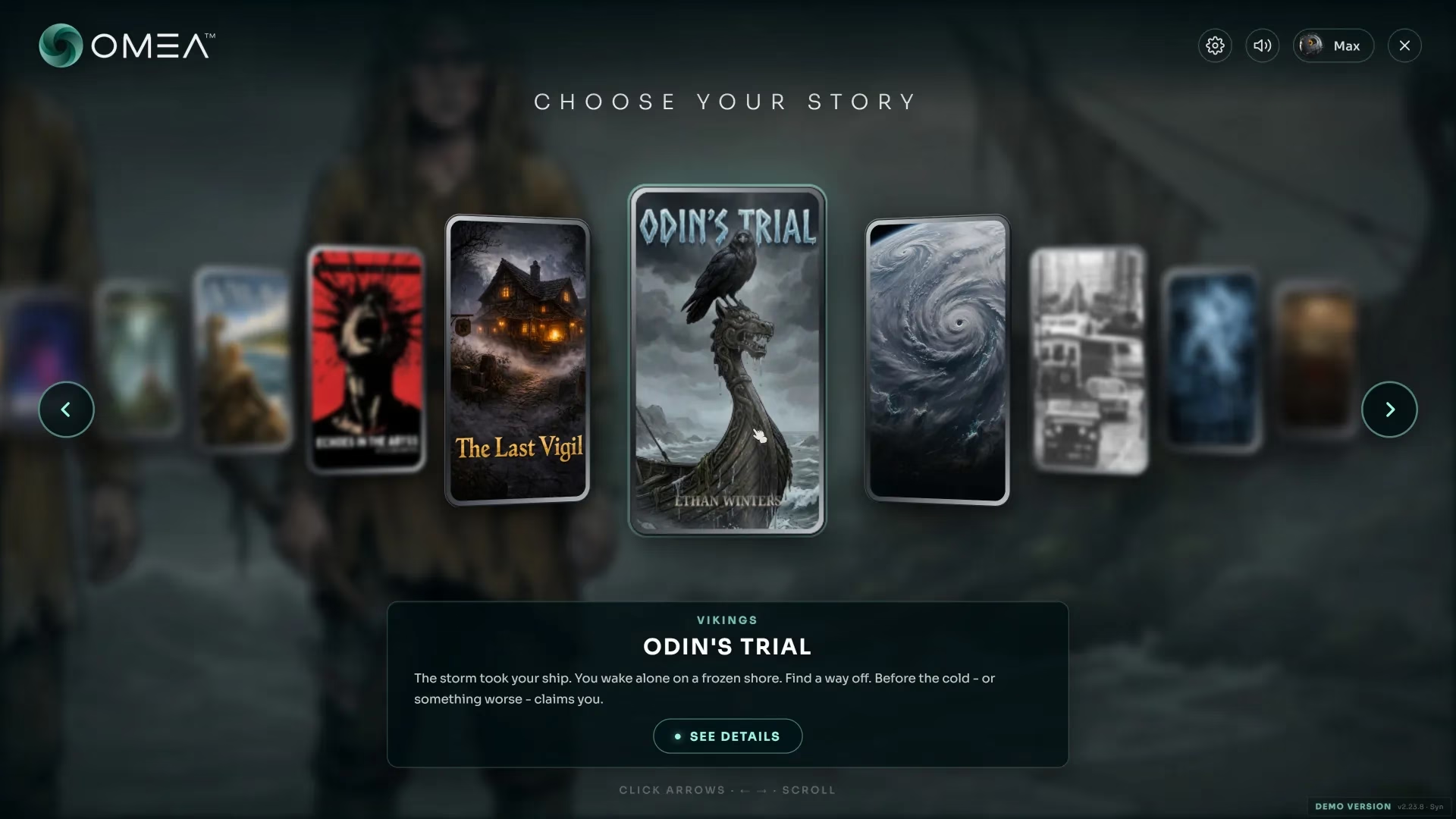
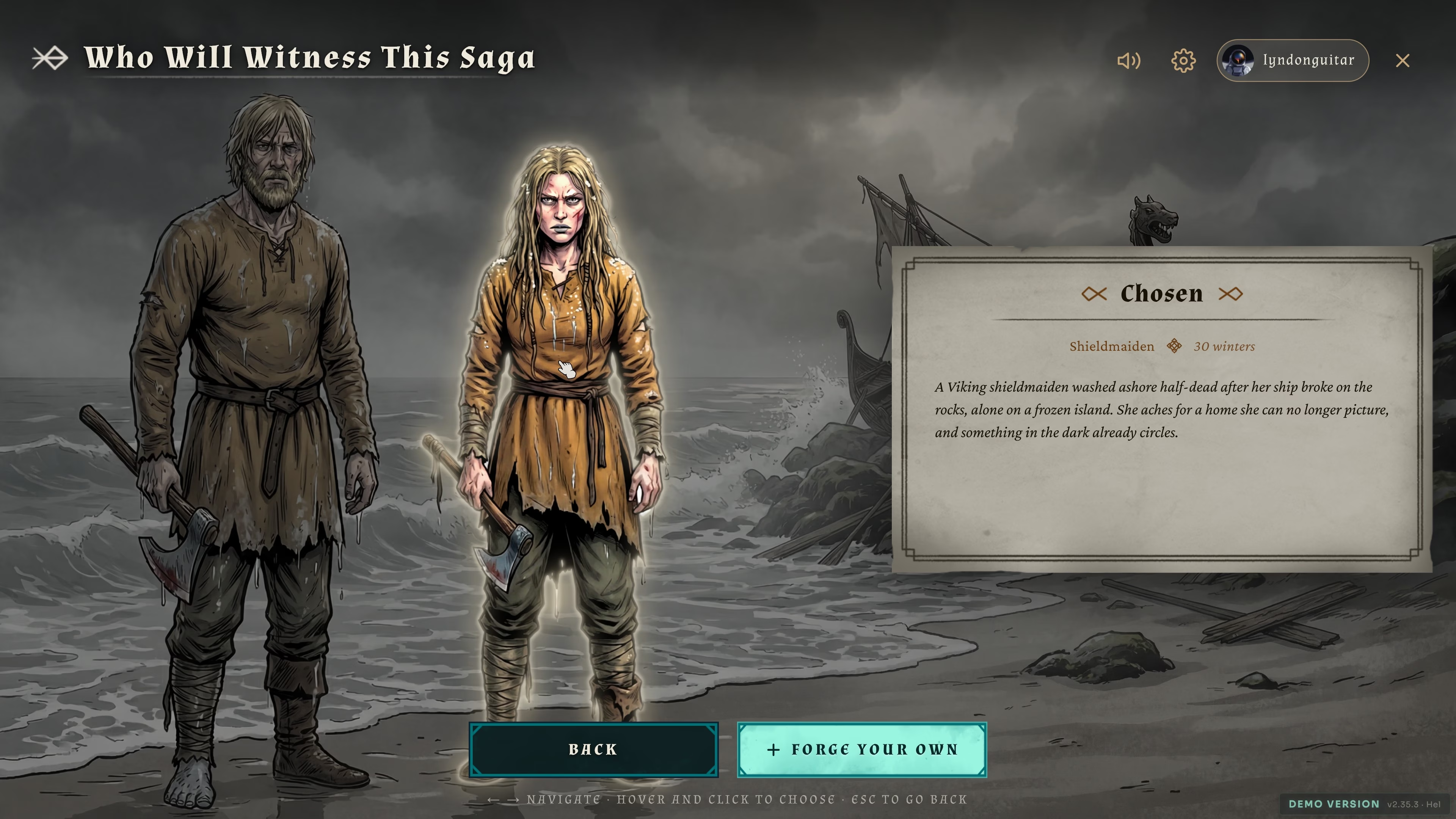
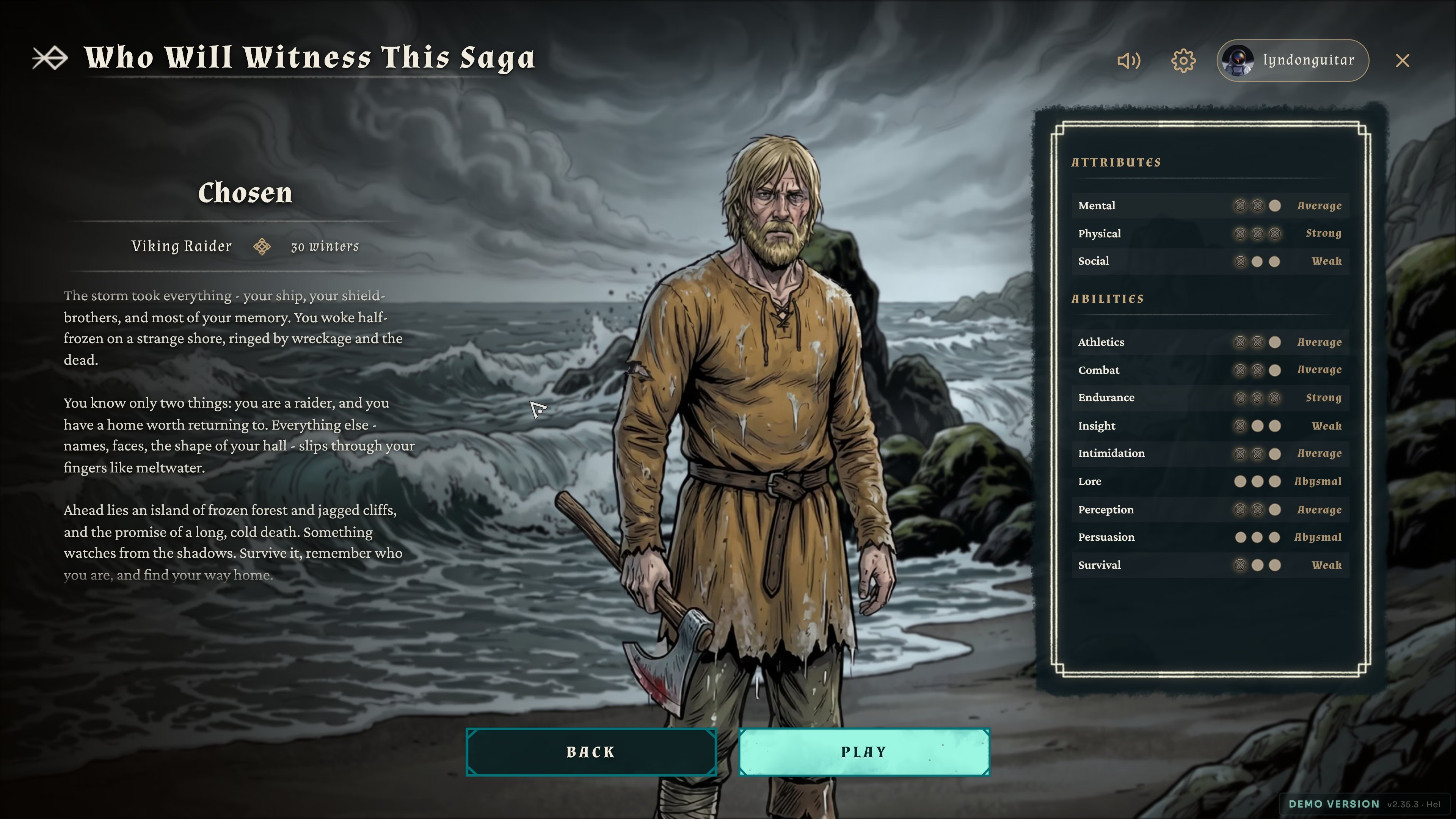
The core premise of OMEA is a pure, unadulterated RPG tabletop or adventure game-like experience brought to digital life. For this early hands-on, we were given access to a single, self-contained demo adventure called Odin’s Trial, where you play as a Viking washed up on a frozen, unforgiving island. Your goal is simple: survive the freezing cold, navigate the locals, and hunt or survive a mythical Beast. But how you go about that is entirely up to you. There are no dialogue trees here. You have a 512-character box to type or speak your actions, and the game’s custom narrative engine— supposedly trained on a massive library of creative fiction—interprets your words and continues the story.
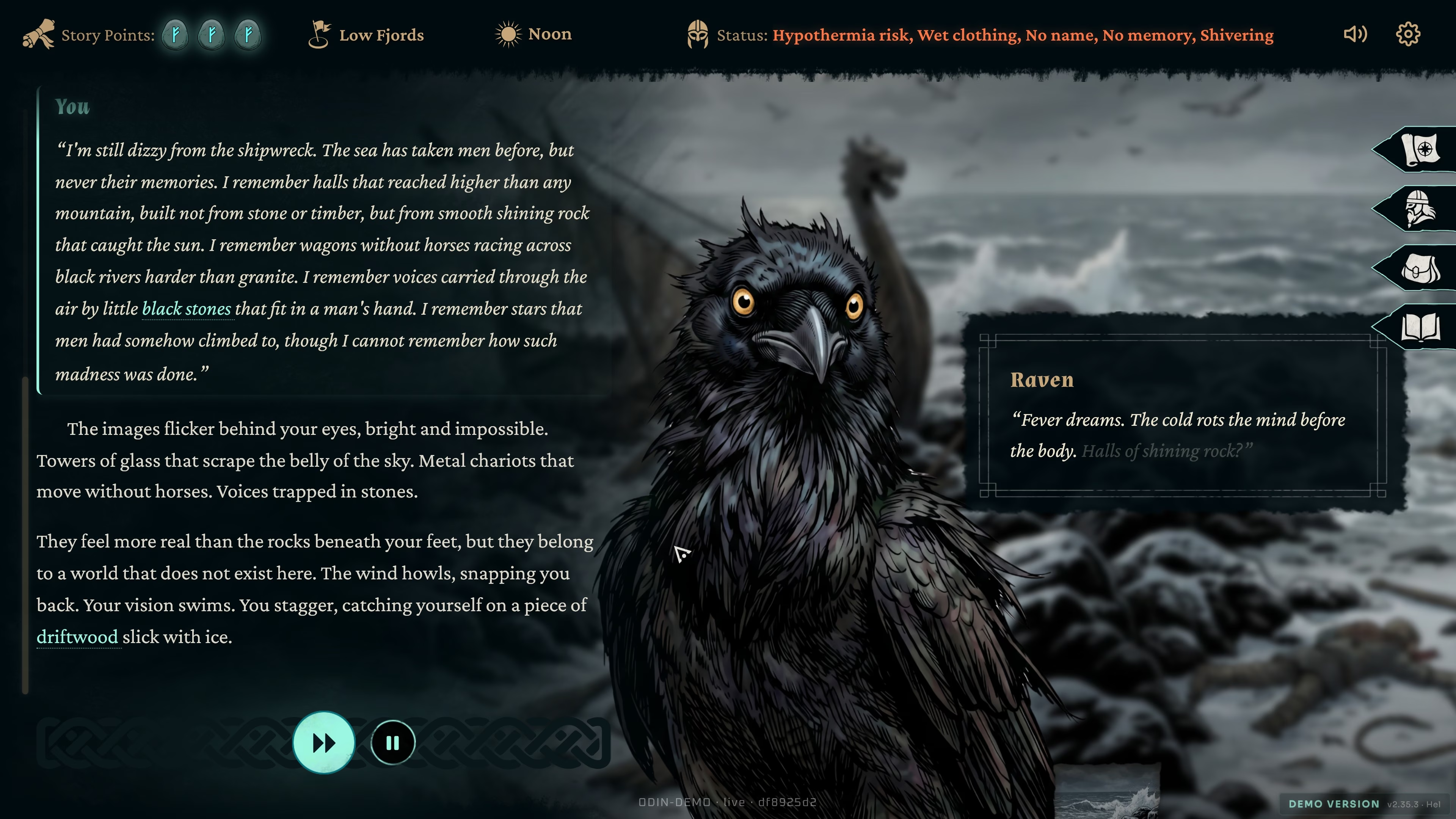
What makes this work so well is the sheer, conversational agility of the writing engine. Most games break the moment you step off the intended path, but this game actively welcomes your weirdness. I decided to roleplay my Viking as a time-traveler who had somehow visited the modern era before waking up on the frozen beach, vaguely remembering skyscrapers. I told an NPC that I remembered “halls that reached higher than any mountain, built not from stone or timber, but from smooth shining rock that caught the sun.” Instead of giving me a generic error or ignoring the prompt, the game had the narrator dryly remark: “you hit your head harder than I expected.” It was a hilarious, perfectly contextual response that felt like playing with a real, quick-witted human dungeon master.
The Game Master truly reacts dynamically to the exact words you say, and what’s more impressive is it is fully voiced albeit AI generated, which still felt surreal. During my playthrough, I decided to test the AI’s sense of humor and named my character “Bulldog, the Flame Master, Wolf-Killer.” Instead of ignoring my ridiculous title, the narrator fully embraced it—actually addressing me that way in full voice, while dryly making fun of the title in the subsequent scenes.
The mechanical responsiveness goes surprisingly deep. In another sequence, I tried to push the system by describing a modern weapon in high-fantasy terms. I told the game I found “a strange weapon, black as charred wood, with a curved iron belly and a hollow mouth at one end”—essentially describing an AK-47. The engine didn’t skip a beat. It inferred exactly what I was trying to describe, accepted the logic of the world, and instantly rewarded my creativity by adding a “Strange Black Weapon of iron and wood” directly to my character’s inventory.
Of course, given this much freedom, your first instinct is going to be trying to break the game. I tried to “cheat” my way out of the freezing cold by simply stating that I stumbled upon a warm, fully stocked survival shack containing everything I needed. The AI engine handled this beautifully by pushing back on my narrative authority, telling me that I was merely hallucinating from the hypothermia. When I challenged it back, claiming I was “hallucinating that I was hallucinating” and that the shack was real, the game doubled down, describing it as an intricate mental illusion. It’s an elegant way of keeping the player bounded to the actual setting of the frozen island without resorting to invisible walls or rigid “you cannot do that” prompt errors. You are free to act, but you are still bound to the physical reality of the game’s world and state. A shack cannot magically appear just because you typed it in the prompt, not unless the game decides it serves a purpose. There is still a game master, and you are not a God here.
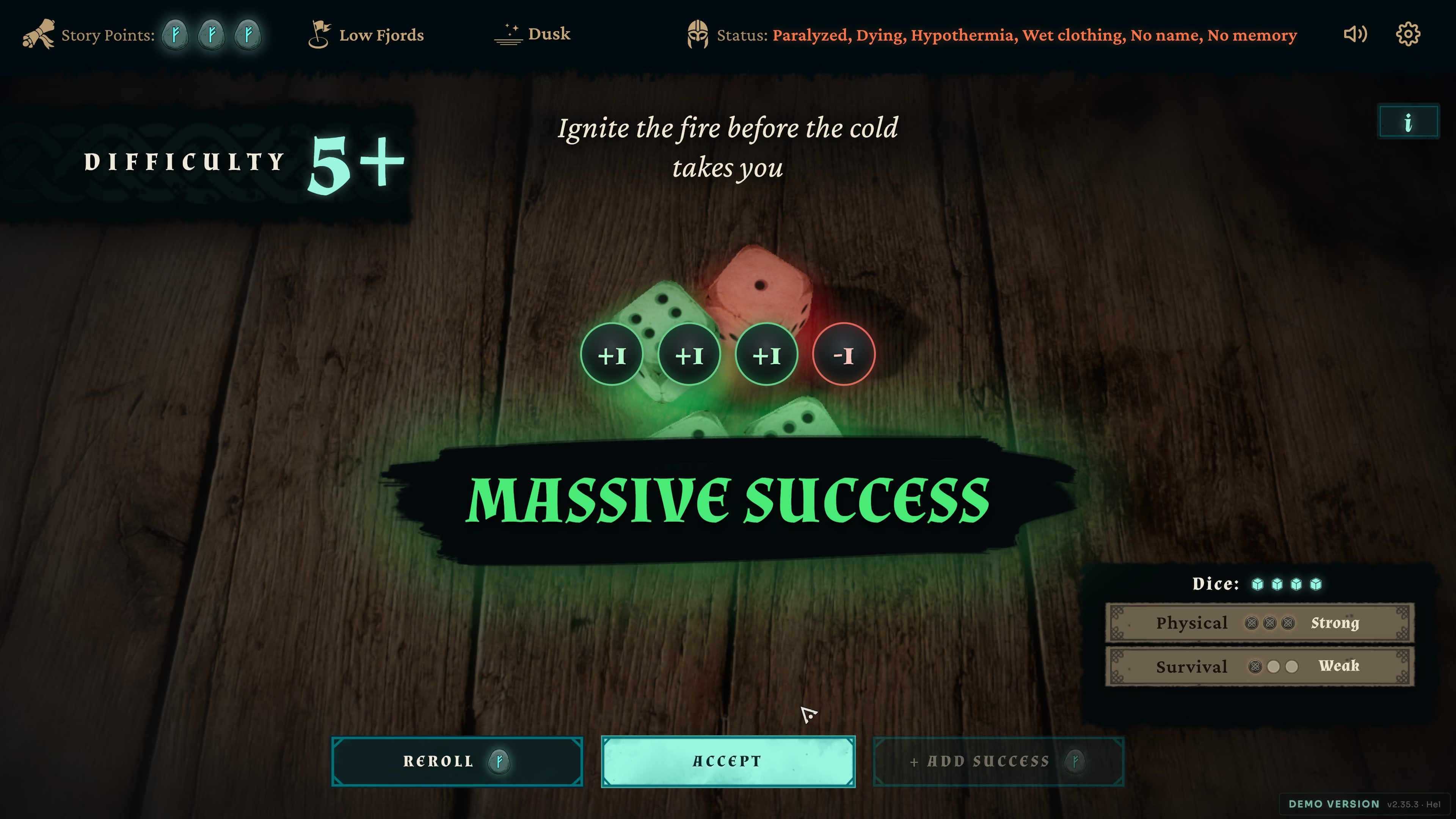
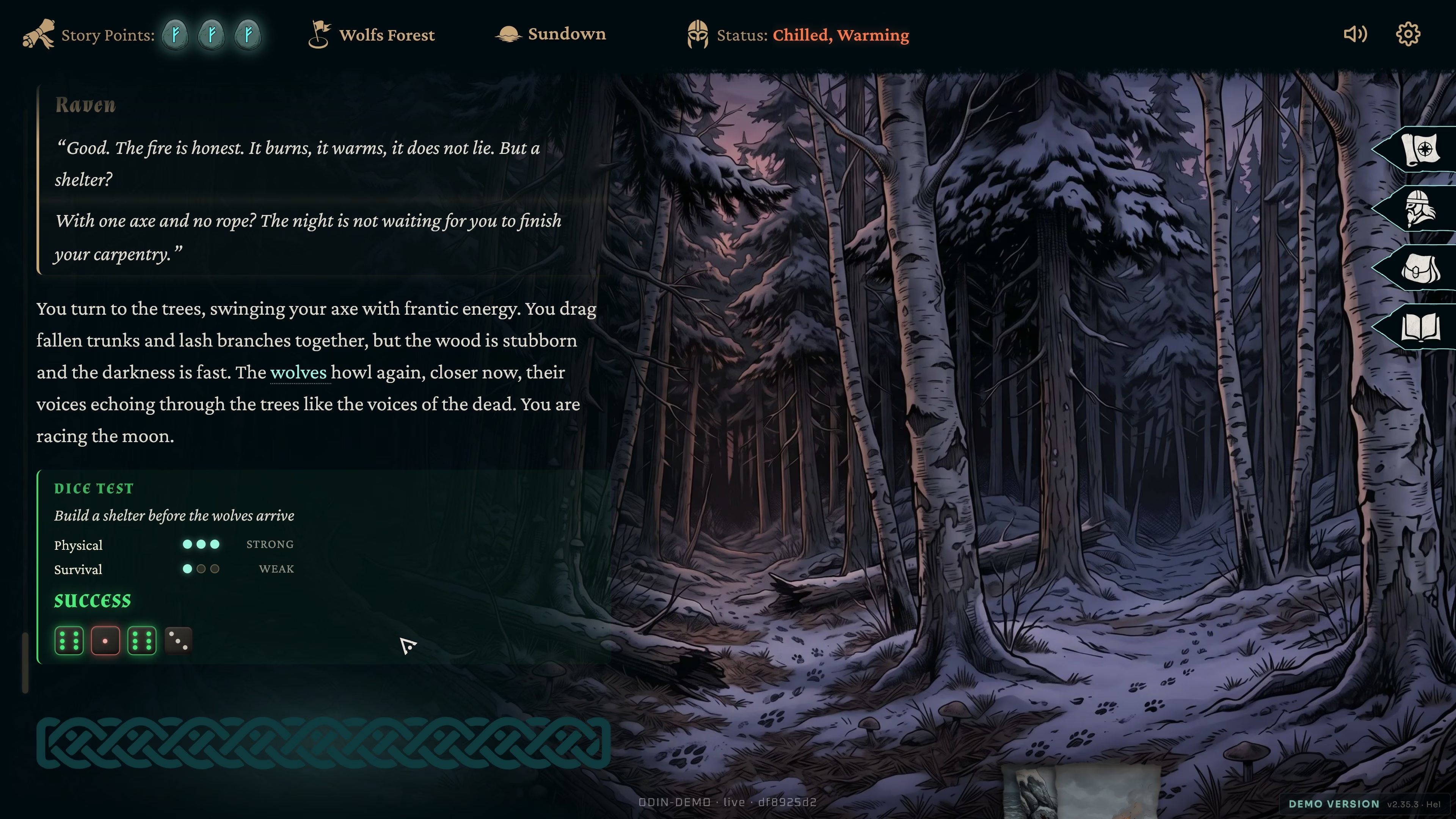
It isn’t just a giant chat window, either. To keep things from feeling like a pure collaborative writing exercise, OMEA incorporates physical dice rolls to determine the success of your wild ideas. If you decide to run away or attack an enemy, the game will trigger a digital roll that can turn a simple decision into an absolute disaster. This layer of mechanical unpredictability is crucial; it prevents the player from simply writing themselves out of every dangerous situation and keeps the survival elements, at least of Odin’s Trial feeling tense and meaningful.
For all its tabletop aspirations though, the traditional RPG stats and skills felt largely superficial beyond the dice rolls, taking a back seat to your literal phrasing rather than dictating your character’s actual capabilities. The dynamic nature of the AI means that a clever sentence or a creative bluff will almost always carry you further than whatever arbitrary numbers are written on your character sheet.
The presentation, however, is where the current version of the game shows its limitations. The entire experience is fully voiced, which is an incredible feat for a game where the dialogue is being generated in real-time, but the narrator still sounds distinctly artificial. It has that slightly flat, robotic cadence of modern text-to-speech tools that can pull you out of the cold Viking atmosphere. Although, it is still passable and ultimately I was impressed.
Additionally, for a game that isn’t graphically heavy—relying mostly on beautifully illustrated static scenes—the client runs incredibly sluggishly. There’s a noticeable delay and a heavy hardware drag when the engine is processing your inputs, suggesting that the background architecture could be quite resource-intensive, or just unoptimized.
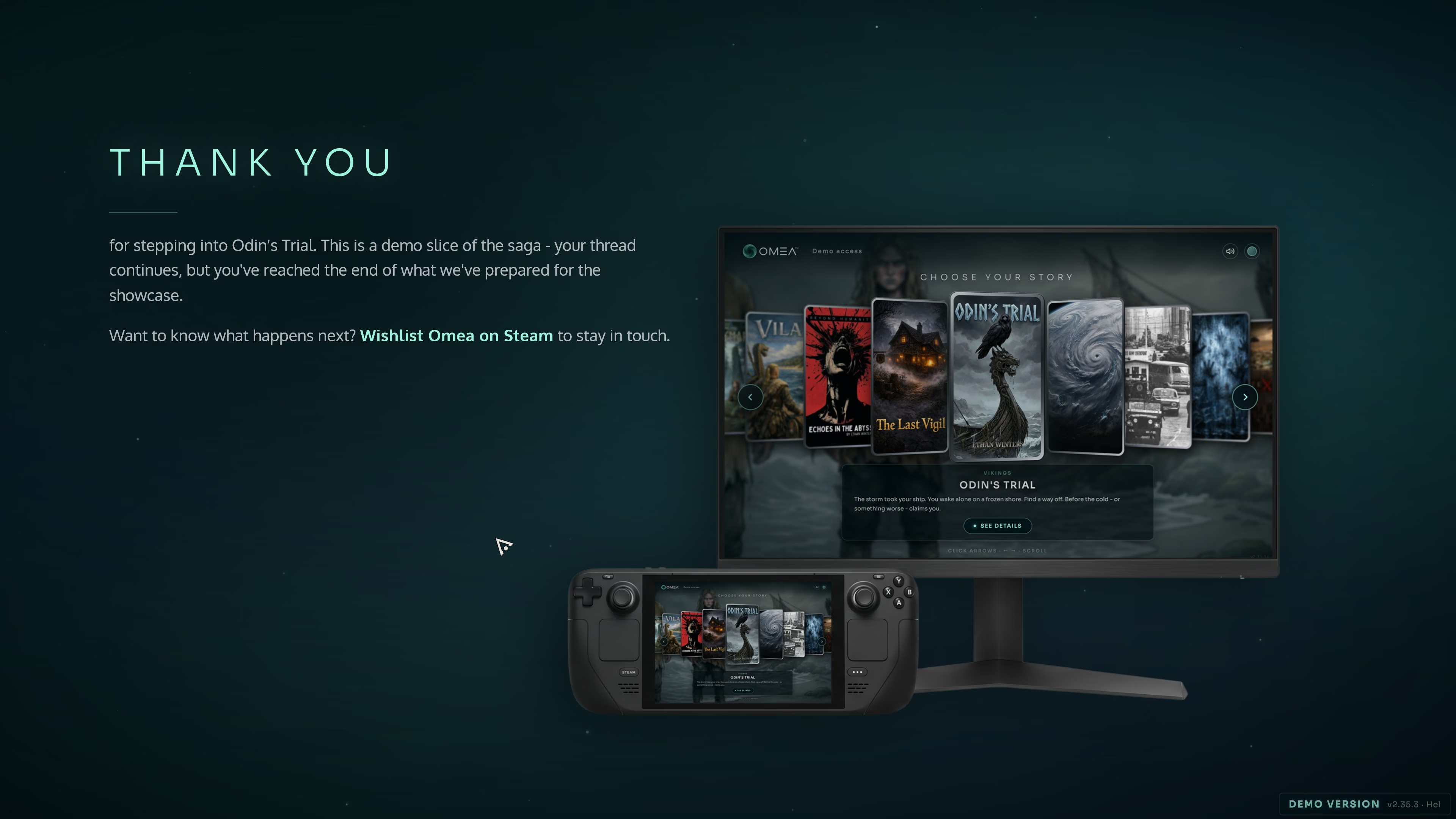
It is vital to keep the scale of this project in perspective. While the developers are promising a massive platform where players can eventually explore everything from deep space to dark fantasy worlds with entirely unique backstories, what we have right now is just a quick demo. Odin’s Trial is a proof of concept—a tiny, controlled slice of a much larger, theoretically infinite pie.
Because it is just a single scenario, it doesn’t represent “full” open-ended freedom yet. You are still dropped into a preset story mold with specific boundary parameters. The real test of OMEA will be seeing if this level of high-fidelity reactivity can hold up over a massive, multi-hour campaign spanning different genres, or if the AI’s logic will start to loop and unravel when stretched past the boundaries of a short trial.
Even with the technical hiccups, the slightly stiff voice work, and the limited scope of the demo, playing OMEA feels like witnessing a genuine milestone in the use of GenAI in visual novel-like adventure games in ways that traditional games cannot do. It’s a glimpse into a future where games finally stop treating players like sheep to be herded down a scripted corridor. When you walk through a town, talk to a stranger, or try to bluff your way out of an execution, the consequences of those words are truly recognized and ripple forward.
OMEA is a game platform that relies entirely on your own imagination to shine. If you play it like a standard, boring RPG, you’ll get a standard, boring story. But if you’re willing to play along, test the boundaries, and treat the AI like a creative partner, it offers a level of roleplaying freedom that makes almost every other modern RPG feel incredibly dated in terms of storytelling reactivity.