
9
Score
Short, Stacked, and Absolutely Stellar
Dispatch Review
By lyndonguitar
Published on January 4, 2026 review
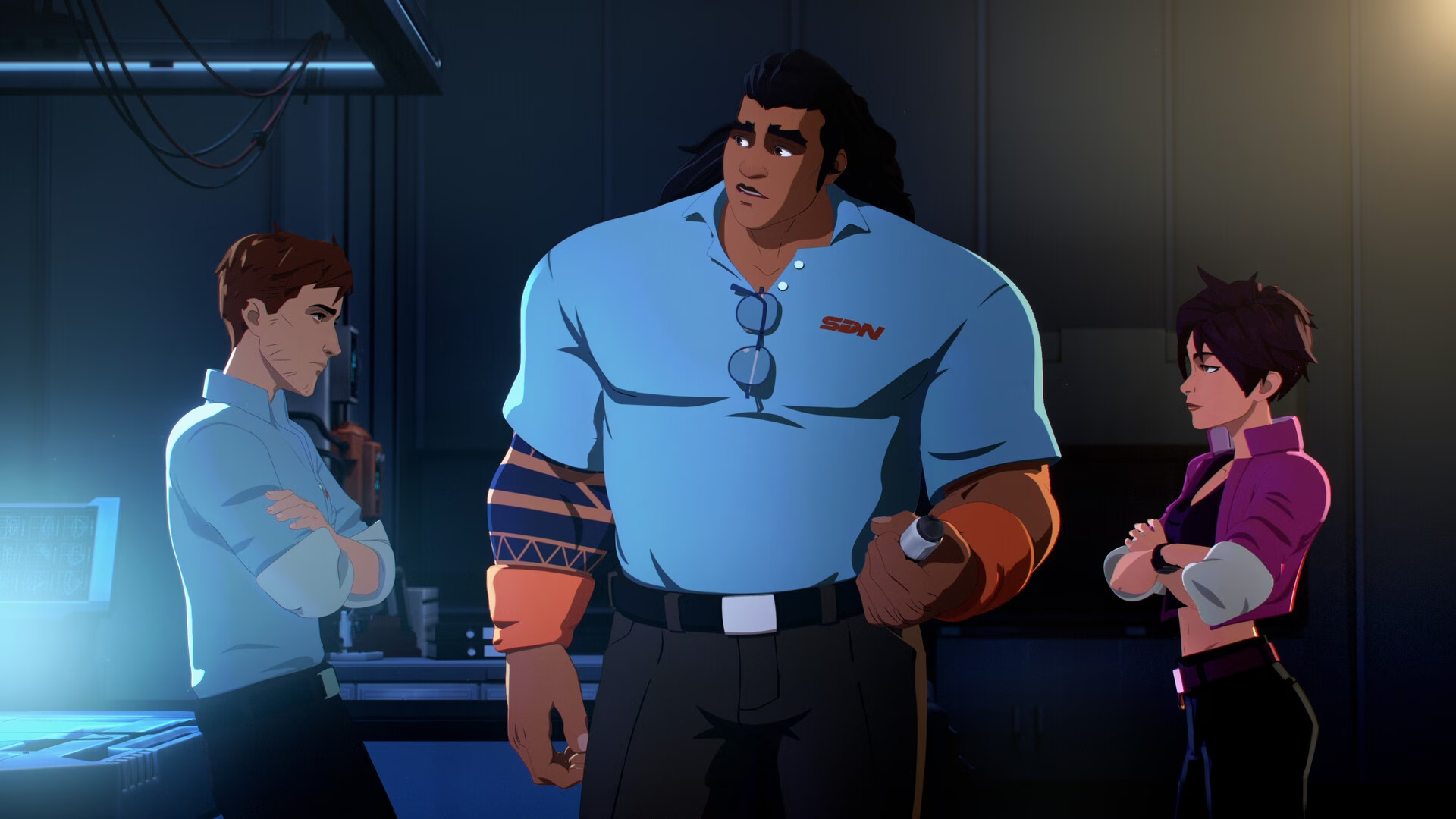
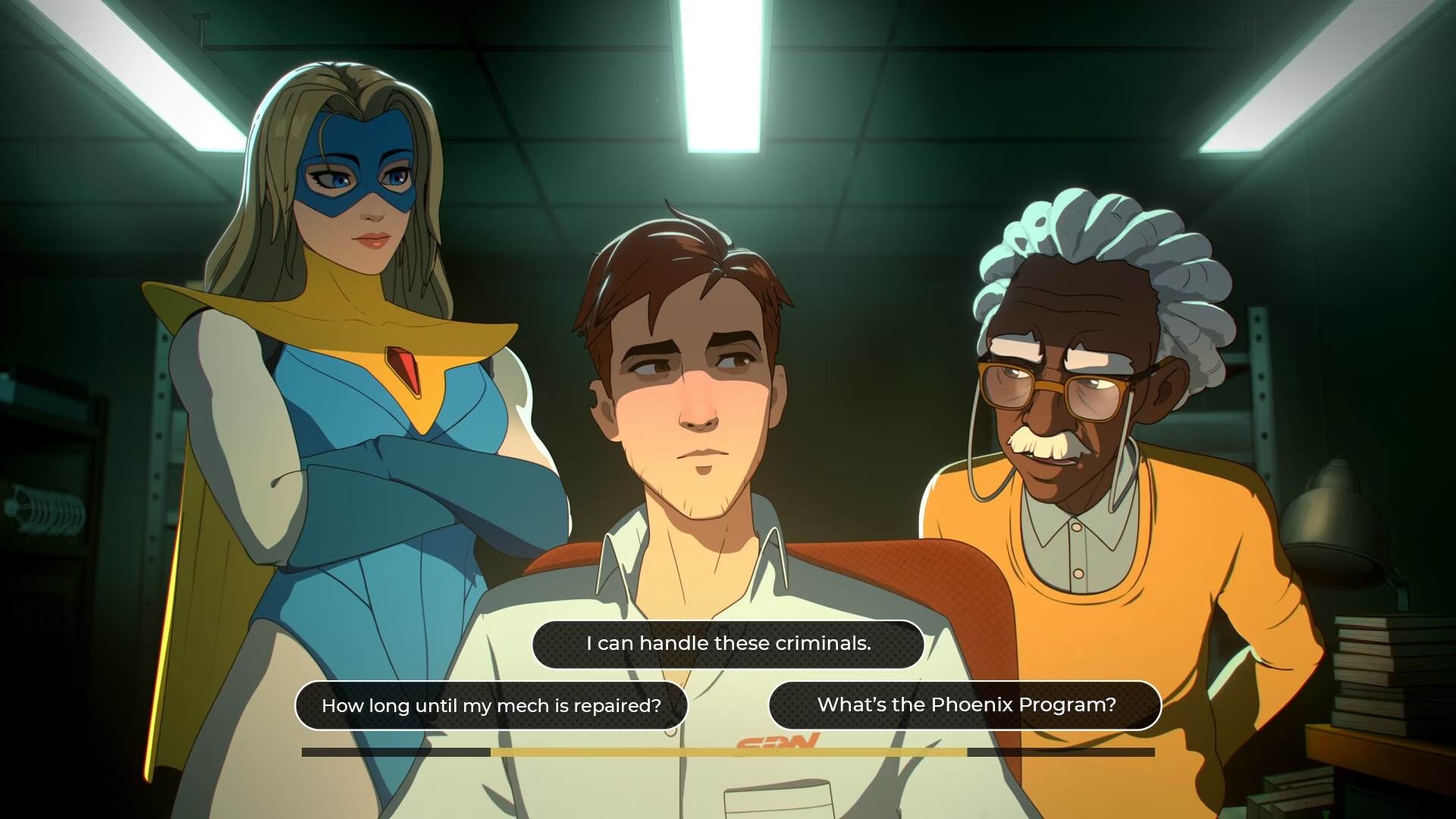
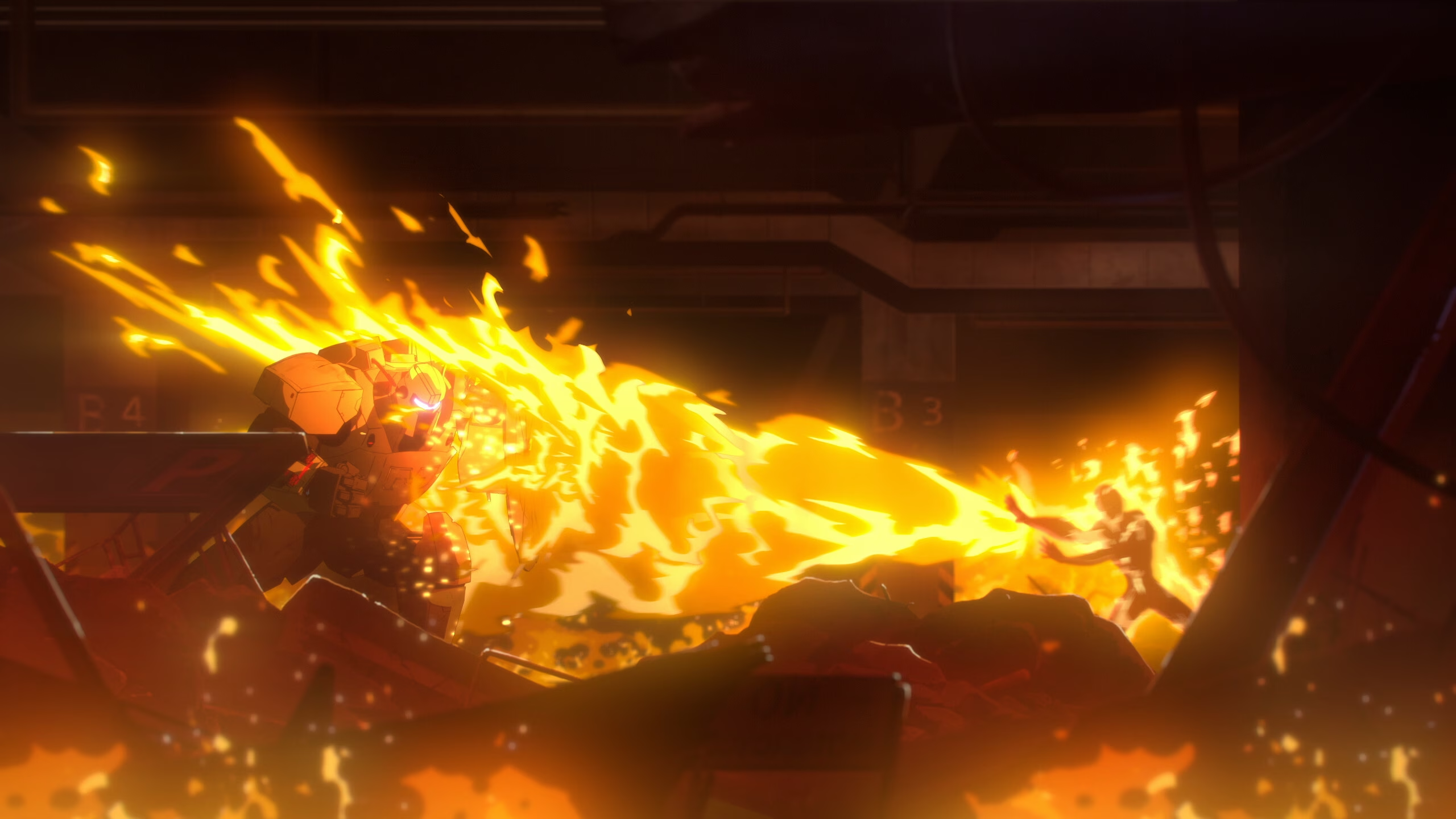
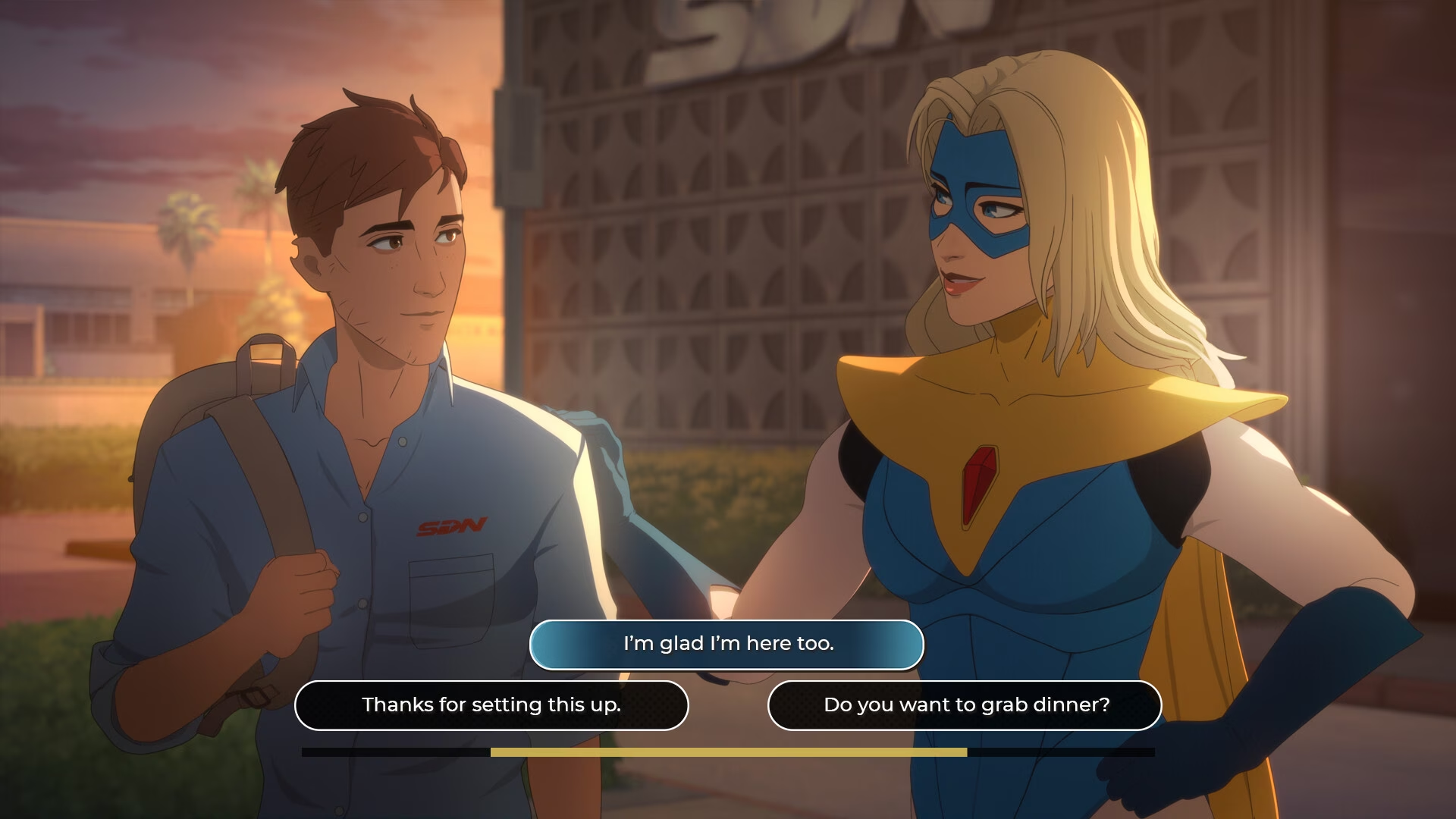
How is it possible that a short game like Dispatch is this jam-packed with absolutely cool, hilarious, and outright epic moments? A lot of “short” narrative games feel like extended demos or proof-of-concept experiments. Dispatch feels like a short but fully realized eight-episode season that just happens to be interactive.
🎬 Pros
💔 Cons
From Episode 1 all the way to Episode 8, Dispatch just does not miss. The jokes land. The timing is sharp. The action is so fun to watch that you genuinely forget you’re “playing a game” and not just binging a wild TV series. Then it reminds you that yes, you actually have some control here (sometimes even forgetting that I need to pick up the controller) - all just enough for your decisions and the “Dispatch” side of things to matter without bogging you down in complicated gameplay mechanics. Dispatch hits that sweet spot where gameplay and narrative don’t compete; they feed into each other. Instead of taking you out of the narrative when the gameplay happens and vice versa.
To be honest, Dispatch is barely a video game in a traditional sense, It often feels more like a highly interactive TV series that borders on being a game. Yet, if its stellar execution earned it a Game of the Year nomination, I wouldn’t complain, because it delivers a great gaming experience nonetheless.
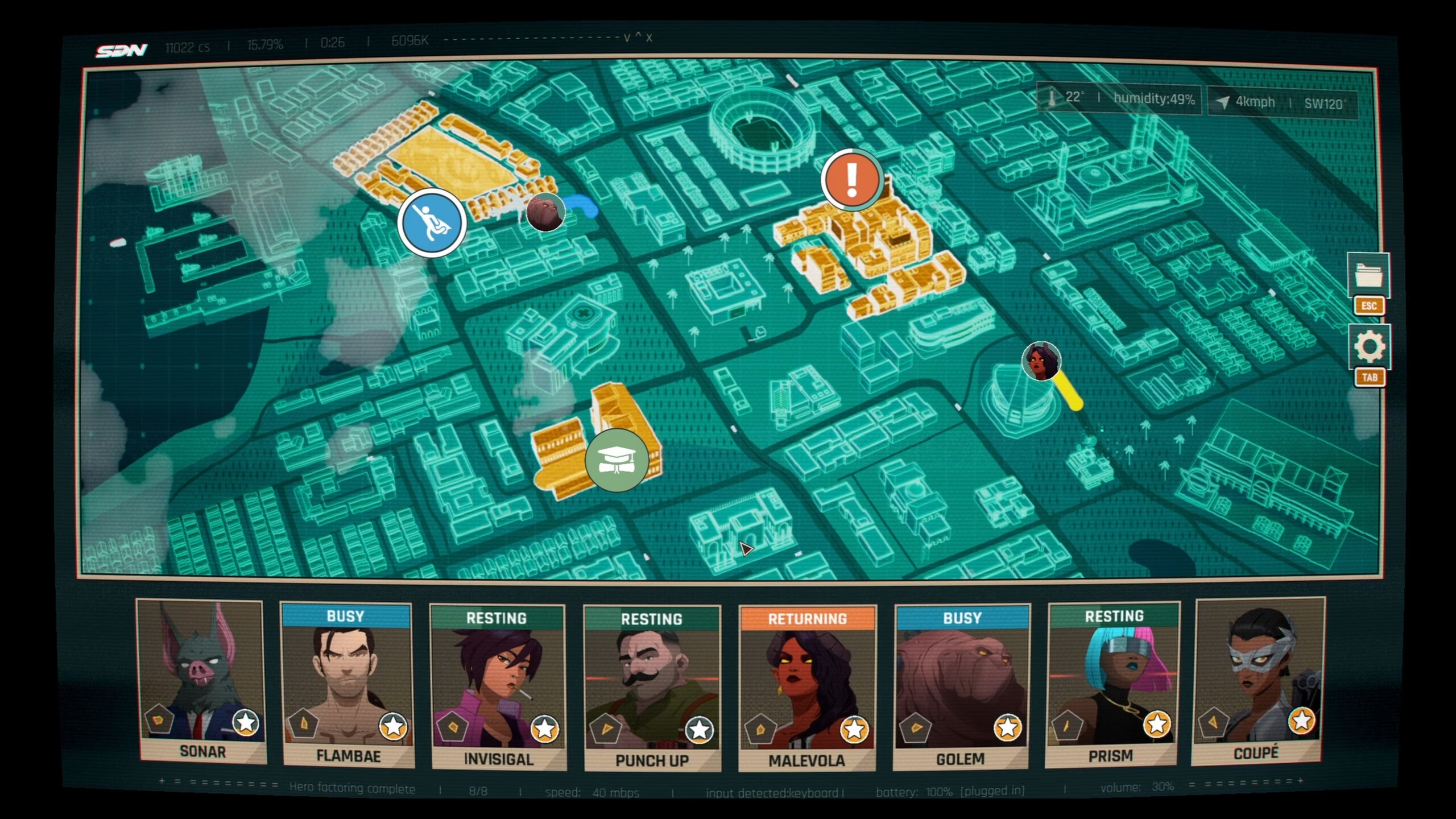
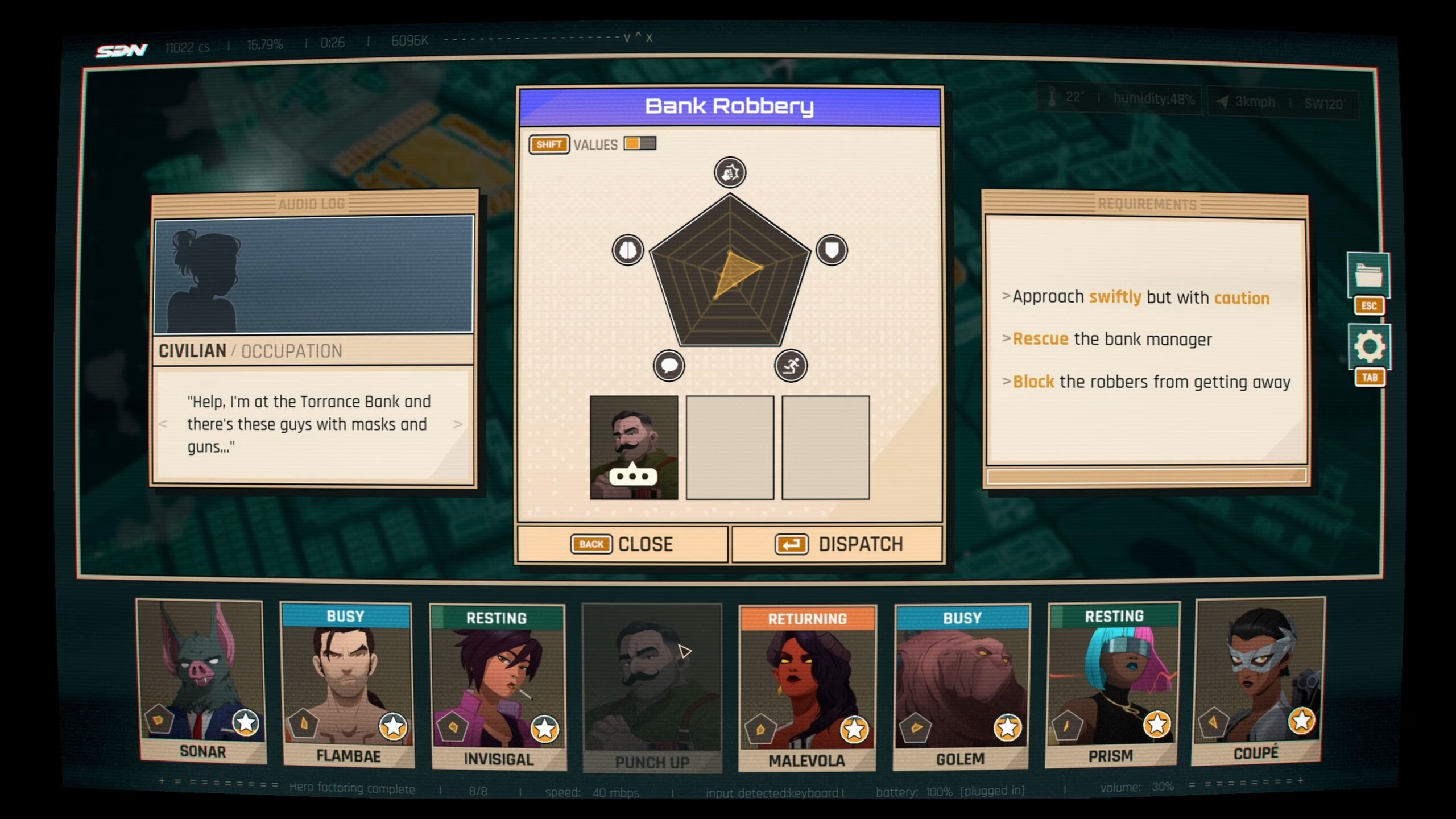
Every episode, there is a segment wherein you will perform your job as a ‘Dispatcher’. You act as the handler for your squad of misfit superheroes, fielding emergency calls and deciding which hero to deploy based on their specific stats - Combat, Vigor, Intellect, Charisma, and Mobility. it’s about logic and consequences. If you send a hero with max Combat but zero Charisma to a delicate hostage negotiation, they might “solve” the problem by punching everyone, causing massive collateral damage.
You have to juggle cooldowns as heroes get tied up on missions, forcing you to rely on your other heroes even if there is a mismatch on the stats, when things get hairy. It’s a perfect layer of strategy that makes you feel responsible for the chaos on screen without bogging down the story in spreadsheets.
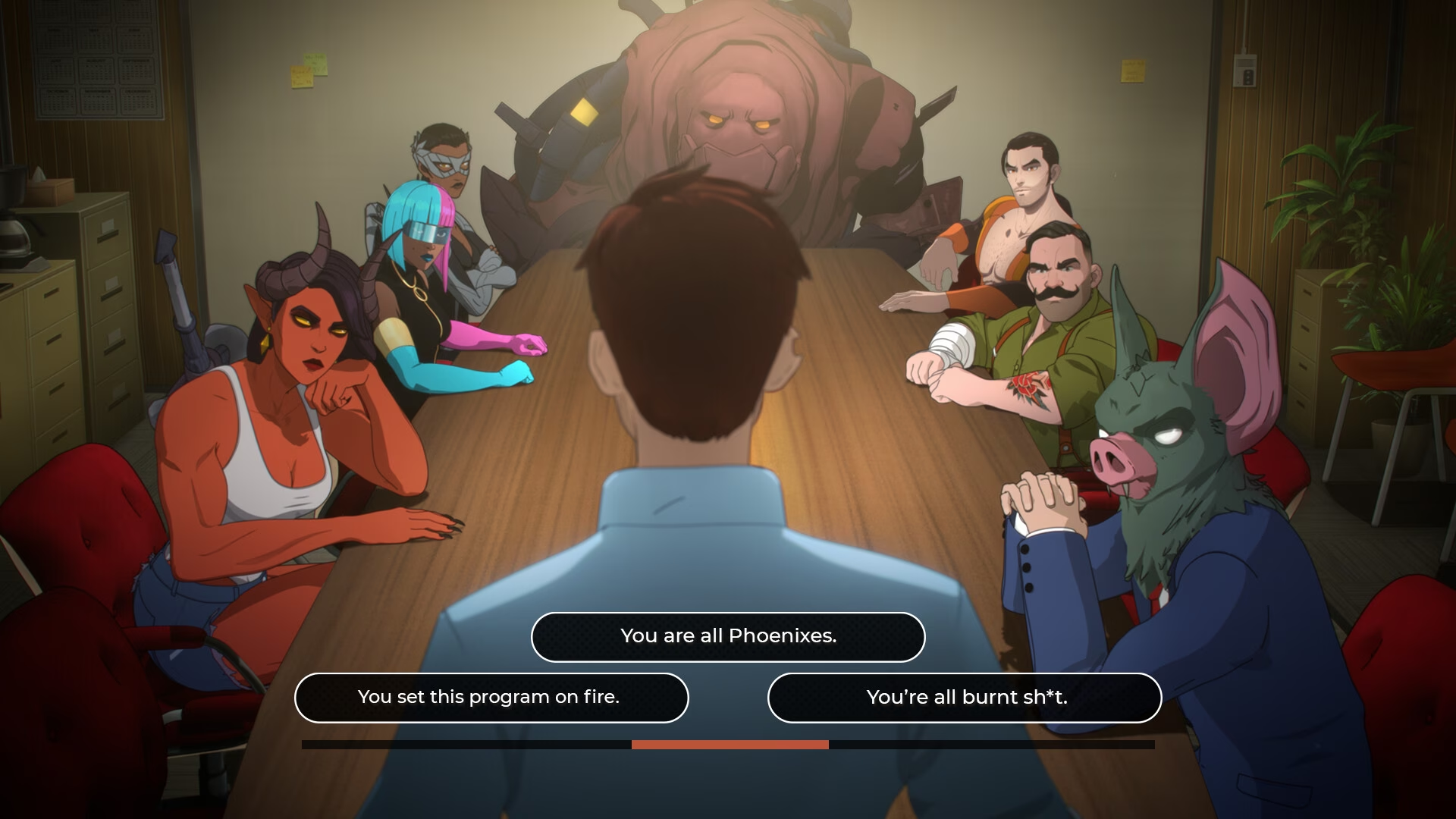
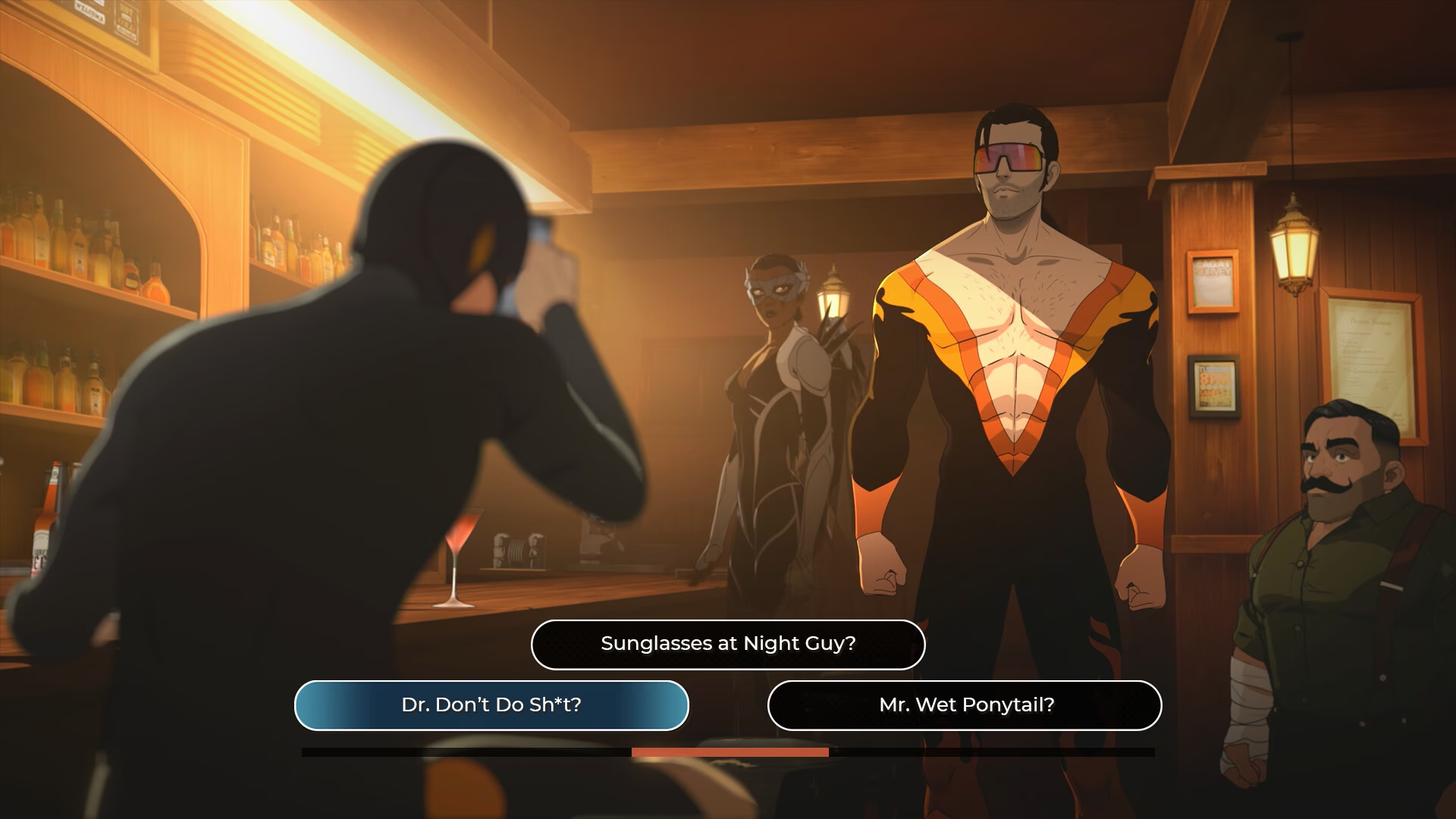
The gameplay loop is surprisingly engaging for what could have been a simple menu screen. After your shift ends, the story continues via cutscenes with the player choosing different dialogue options to progress, the game seamlessly transitions from management sim to an interactive drama.
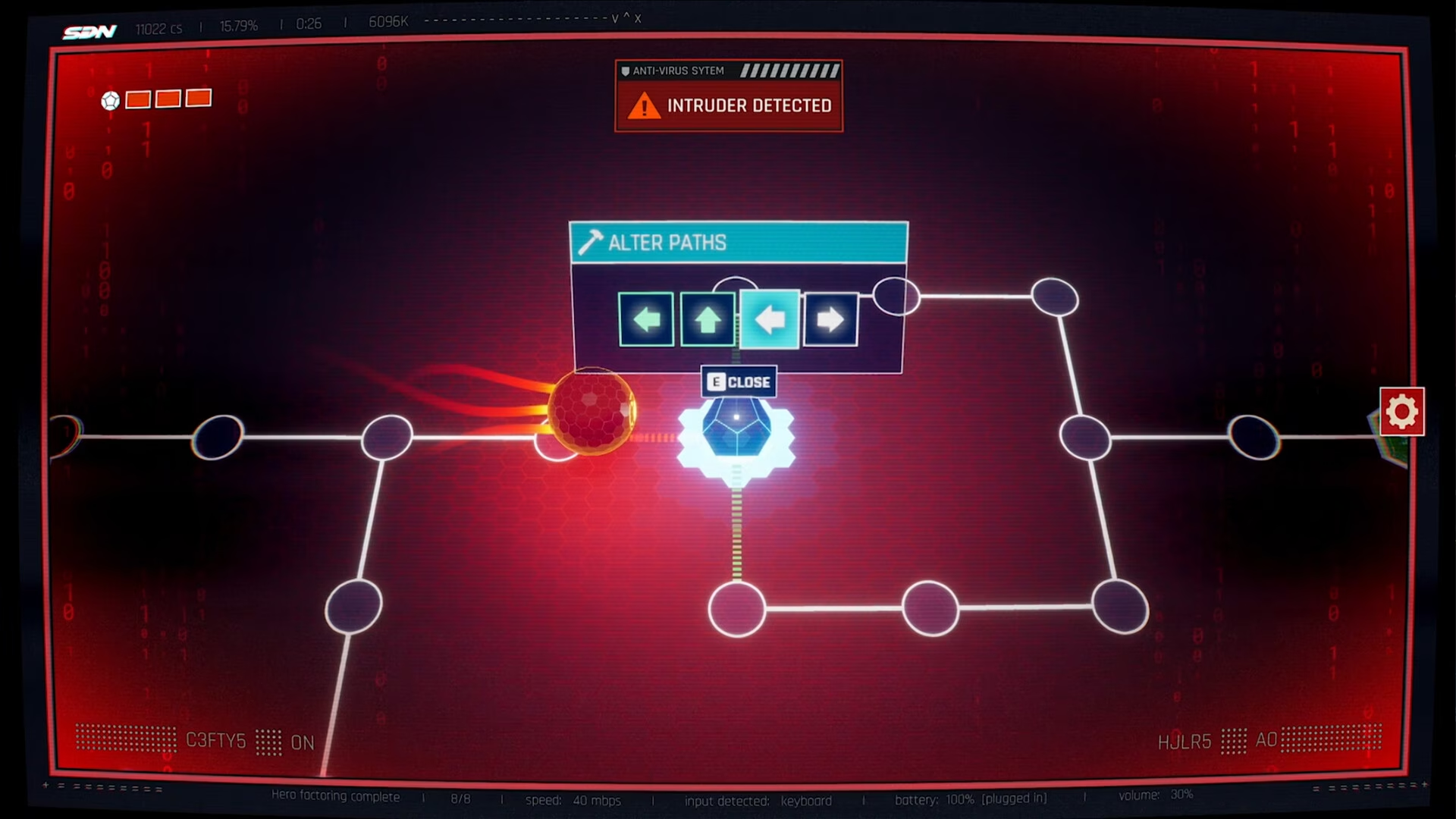
There is also a hacking mini-game for you to personally help the heroes in some instances, that serves as a nice palate cleanser, breaking up the menu-management loop just enough to keep things from feeling repetitive.
One of Dispatch’s biggest strengths is its cast. On paper, it sounds chaotic: a mix of YouTubers, content creators, and traditional actors all thrown together. In practice, that blend gives the game a weirdly authentic energy. It feels like people you might actually follow online got dropped into a high-stakes narrative.
Seeing heavy hitters like Aaron Paul (Breaking Bad) and Jeffrey Wright (The Batman) trade lines with internet icons like MoistCr1TiKaL and Jacksepticeye creates a surreal but perfect dynamic. The unique mix pays off instantly.
The performances work because the writing backs them up. Characters are well written and surprisingly relatable, each with their own flaws and quirks. Even with the game’s short runtime, it does a great job of making you feel attached to this weird little team. You only spend a handful of episodes with them, but it’s enough to care.
The character development is also surprisingly well done. Some characters start off feeling insufferable or painfully cliché, the kind you think you’ve seen a thousand times before. Then the game slowly peels back layers, and suddenly they’re not so one-note. In several cases, Dispatch sets you up to think, “Oh, this guy is obviously going to do X,” and then it completely flips the script. Sometimes you’d think they’d flip the script, but to only end up not doing it. That subversion of expectations keeps the story fresh even when you’re sure you’ve figured it out. It’s not that predictable.
Dispatch does involve choice, but not in the “every decision creates a new universe” kind of way. If you go in expecting a sprawling tree of wildly different endings and outcomes, that’s not what this is.
In the grand scheme of things, the overall story path is still quite similar no matter what you do. Core events will still happen. Certain beats are locked in. You are not rewriting the entire narrative from scratch.
But that doesn’t mean your decisions are meaningless. Far from it.
So while the skeleton of the story stays the same, the meat on the bones changes depending on how you play. And honestly, that approach fits the game’s structure. Not every game needs a hundred endings and flowcharts that look like conspiracy boards. Dispatch focuses on telling one strong story with some meaningful variations, and that’s a valid design choice that pays off with the quality it was delivered in.
I have just one big personal gripe: the best female hero (in my opinion) on the team is not romanceable, and it stings.
When a game does such a good job making you care about its cast, it’s natural to want more ways to connect with them. Dispatch clearly knows how to write charming, layered characters, so when your favorite female hero ends up being completely off-limits romantically, it feels like a missed opportunity.
Even without a second playthrough yet, Dispatch has that rare quality where you finish it and immediately think, “Okay, but what if I’d done that other thing instead?” The plan for another run is already brewing, not because the ending felt incomplete, but because it feels like there are more angles worth seeing, not a totally different story, just the different reactions, different combinations of scenes, maybe a few new surprises.
For a short, episode-based game, Dispatch manages to feel surprisingly full. The pacing is tight, the writing is sharp, the performances are on point, and the choices, while not universe-shattering, still feel impactful enough in the moment. It’s the kind of game that respects your time but still gives you plenty to chew on.
If you want something that plays like an interactive TV season - with great jokes, strong characters, and just enough agency to make you sweat your choices - Dispatch is absolutely binge-worthy your time. I only clocked in at about 8 or so hours for a single playthrough, so its quite playable in a couple of sittings if not one.